Showing posts with label Book Reviews. Show all posts

Saturday, June 14, 2014

Mighty Dads - A Book Review

Just in time for Father's Day there is a new book to share with you all! 

BIBLIOGRAPHY
Holub, Joan. 2014. Mighty Dads. Illus. by James Dean. NY: Scholastic Press. ISBN: 9780545609685.

BOOK REVIEW
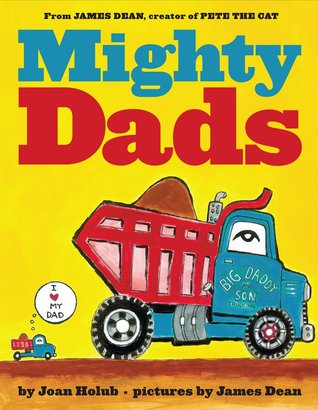
Dads do many things. Even construction vehicle dads. Dump trucks, bulldozers, cranes, and the rest of the mighty dads dig, scoop, spin, and lift to teach and encourage their children. The story is in a welcoming and perfect rhyme, and the text is in a bold font that allows the children to see. James Dean's illustrations are absolutely wonderful! They are bight in color and, though simple in general, has plenty of details. The children will love seeing the little construction children next to their dad. There are not too many books about fathers, especially compared to mother books. This is a must read and own book for any family library, school library, public library, and any storytime celebrating everyone's mighty dads!

CONNECTION

  • Have the children make Father Day's cards, especially with a construction theme!

*Book image was taken from www.goodreads.com


Thursday, September 26, 2013

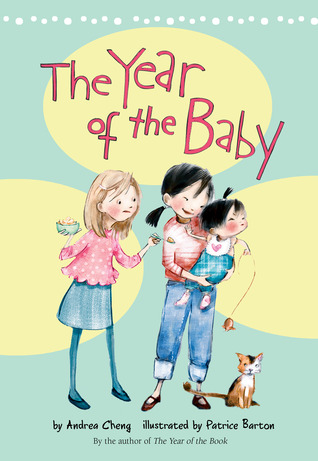
The Year of the Baby - A Book Review

BIBLIOGRAPHY
Cheng, Andrea. 2013. The Year of the Baby. Illus. by Patrice Barton. NY: Houghton Mifflin Books for Children. ISBN: 9780547910673.


BOOK REVIEW
In the sequel to The Year of the Book, Anna is one year older and has two good friends by her side, Laura and Camille. Now, this year's challenge is Kaylee, her new baby sister that her parents adopted from China. Though she is adorably cute and stubborn she just does not want to eat. Anna and her family are concerned when the doctor says that she is not thriving. While the family, along with Grandma, focuses on helping Kaylee, Anna and her friends try to find just the right science fair project idea. Not wanting to do a project straight from a book, like the one chosen by Allison and Lucy, Anna decides through her observations that her baby sister is the answer. Perhaps singing to Kaylee will help her eat more? With the help of Laura and Camille, Anna sings two English songs and two Chinese songs to see which Kaylee responds better too, and the result is twofold.

The reading style of the book is calm and almost relaxing in nature. Yes, the story is compelling enough to keep the readers interested all the way through. The black and white illustrations are equally as simple yet charming. I love how Anna is curious, is always asking questions, and observing things. She is also honest with her feelings and worries, and she is accepting of others and their differences. The topic of an Asian American family adopting a child from China is a refreshingly new to children's books (or at least to this reader) and very interesting to read. Other minor topics about race and the opinions and treatment of girls (such as families in China prefer boys over girls) is also masterfully done. Readers also learn that having children can be difficult. Without out going into unnecessary details, it turns out that Anna's teacher Ms. Sylvester has been having trouble conceiving and wants to learn more about adopting a baby from China like Anna's parents.

Like in the first book, there are Chinese numbers (in character and English translation) and their pronunciations are included at the beginning of the book. In the back, there is also a recipe for Steamed Red Bean Bao Zi. Both are great connections for the young readers to explore after or during the reading of the book. A must-purchase sequel for any collection. You do not need to read the first book to enjoy The Year of the Baby, but if you would like more information about things about the year before when they are mentioned, then read The Year of the Book.I am looking forward to the next installment: The Year of the Fortune Cookies. 

CONNECTIONS
  • Ask the children if they know what their parents did to make them eat when they were babies. 


Read WP-CC's review of The Year of the Book here!

Wednesday, September 25, 2013

Flora and the Flamingo - Picture Book Gush!

This is not entirely a book review (in some form and fashion it really is). This is more of a book gush. I don't know if I can put into words or complete sentences on how much LOVE this book. I have seen so many different types of picture picture over my lifetime as a reader and as a Children's Librarian. Generally, adjectives I've used in the past to describe the books include "cute," "adorable", "pleasant," "lovely," "funny," "icky," "gross" "ugly," (those last three are describing book illustrations are not my cup of tea). I cannot remember a time of when I used the word "beautiful" ... until now. Also, I am not only referring to the illustrations. I am referring to the entire book itself. Cover art. End pages. Illustrations. Book design. Flora and the Flamingo is a beautiful book. Hands down. I don't care what other people may say.

Another way I can describe this book is that it's like finding a friend and never wanting to let it go. I am constantly looking at this book, I had it on display during a My Favorite Stories storytime, I have a poster in my storytime room, and I am getting to the point that I will have buy this book so that it can grace my home for forever. This beautiful book makes me happy.

BIBLIOGRAPHY
Idles, Molly. 2013. Flora and the Flamingo. Illus. by Molly Idle. San Francisco: Chronicle Books LLC. ISBN: 9781452110066.

BOOK REVIEW
Though Flora and the Flamingo is a wordless, flip-the-flap book it does not mean that this book lacks characters or a story. Unlike some lift-the-flap books, but not all, this book has a real storyline. A beautiful flamingo is resting by by the water when Flora appears in a bathing suit, flippers and adorable swim cap. She follows the bird's movement creating a graceful dance between the two of them. Then... a flop. through their twists and turns they have become friends and the flamingo encourages her back to the dance before splashing into the water at the end.

As you are turning the pages, in tuned with the story, and flipping the flaps to reveal the next move, you can hear the music they are dancing to in your head (at least I do!). The sense of movement you get of Flora and the flamingo dancing around the pages is excellent.

A study of lovely pink hues and a pop of yellow from Flora's swim cap is calm and soothing. All picture books are works of art. Art in writing. Art in illustrations. Art in book design. Plain and simple. Flora and the Flamingo is an example when all three things (yes, there are no words, but a story had to be developed somehow. Perhaps note taking? Also, don't forget the cover flap description!) combined creates the ultimate book. This book is a masterpiece. The fonts used on the cover and cover flaps are perfect. The delicate yellow scalloped border of the vignette on the cover. Matching plain yellow end pages. The black and white stripe at the top of the spine. A word for design: Perfect.

For those who enjoy picture books on eReaders I have seen the Adobe EPUB version as well as the Kindle Book version. I was disappointed in the EPUB format as the illustrations did not fill up the whole screen (it did better in the landscape view). The Kindle Book version was better. Not only are you required to view the picture book in landscape (and it fills the entire screen!), but it is still interactive like in the real book. Whenever there is a flap the reader will have to double-tap to "flip" it. The only downside side is that you cannot do both flaps at once like you can with the real book. I still recommend reading/sharing the real, original book format, but the Kindle version is my second best choice. 

It will be a sad day when the book's flaps will be separate from the book pages. However, that means that this book was read over and over again and was loved. Which is also a wonderful thing! A must read and own book!

CONNECTIONS
  • View the book trailer at Chronicle Books' webpage (scroll down to the bottom). Ask the children if the music that was used matches the music that played in their head while they read the book.
  • Play different types of music while reading the book (perhaps several times) and allow the children to decide which one they think fits the best. Different answers are encouraged!

EXRTA
I am not the only one who thinks so. I came across this blog post by Carter Higgins (Design of the Picture Book). Her review of the book is beautifully written and she echos the same thought I have:

 "... if I had to put all of my money on the top Caldecott contender for this year? This one, by leaps and bounds."

For the first time, my fingers will be crossed when it comes to the Caldecott Medal announcement next year!

Have I gushed enough? I don't know...

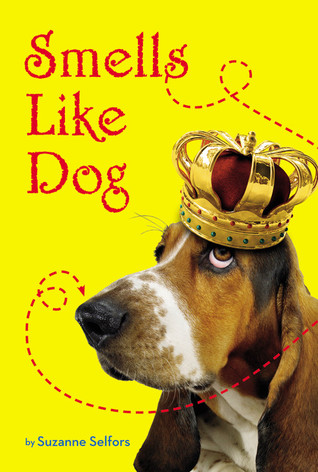
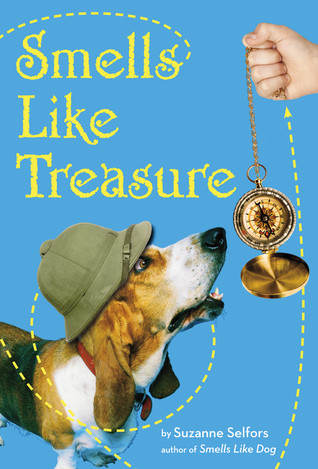
Smells Like Dog Series - Book Reviews

I think I have found yet another favorite read this past month and a half. It is the Smells Like Dog book series by Suzanne Selfors.

BIBLIOGRAPHY
Selfors, Suzanne. 2010. Smells Like Dog. NY: Little, Brown Books for Young Readers. ISBN: 9870316043984. 

Selfors, Suzanne. 2011. Smells Like Treasure. NY: Little, Brown Books for Young Readers. ISBN:
9780316043991.
Selfors Suzanne. 2012. Smells Like Pirates. NY: Little, Brown Books for Young Readers. ISBN: 9780316215756.
 
BOOK REVIEW
Homer W. Pudding is not necessarily your average twelve-year-old boy. He's a little chunky, he loves maps, and he dreams of being a treasure hunter like his Uncle Drake. The other kids at his one-room school (he lives in a small country town) all make fun of him. Living on his father's goat farm where he has chores isn't much of a treasure-hunter's way of life either. His father is a grouchy goat farmer (who has lives with dashed dreams), his bossy older sister (who has a pension for road kill and taxidermy) is always embarrassed by him, but his mother and little brother Squeak love him unconditionally (his father and sister do too, really). In the first book Smells Like Dog, not too longer after sharing the secret that he had found the map to the world's most famous pirate Rumpold Smeller's most coveted treasure, Uncle Drake is tragically and puzzlingly swallowed whole by a turtle at The City Zoo, and Homer inherits his "most treasured possession." But is it the basset hound named Dog who cannot smell a single thing or is it the coin found on his collar that has word L.O.S.T. on it? During a trip to The City and the Museum of Natural History, which is where he meets his first enemy Madame le Director,  the adventure begins to solve mystery of what happened to Uncle Drake, where did all his belongings disappeared to, what does the coin mean, and why did Uncle Drake have a dog that cannot smell? With the help of his new friend Lorelei,  Homer enters a whole new world as that he has always dreamed of. Full of twist and turns, readers will feel the excitement, hurt and betrayal (sometimes friends have secret motives and will stab you in the back, per say), and triumph right along with Homer and Dog.

Smells Like Treasure, the second book in the series, starts off a few months after the first one ended. Homer is back in Milkydale at the farm when he gets the notification that L.O.S.T. (the Society of Legends, Objects, Secrets, and Treasures), a secret society of treasure hunters, has called a meeting to discuss Homer inheritance of his Uncle Drake's chair in the group. His friends and fellow members of L.O.S.T., extremely tall  Zelda and and inventor Ajitabh, are on his side, but other members are skeptical for allowing such a young member into the group let alone if he truly was rightful heir to the empty position. Then, all of sudden, Lorelei enters to claim the empty spot stating that she has the coin of membership. Now, Homer and Lorelei must put the treasure-hunter skills to the test and be the first person to find the hidden membership coin to claim their rightful place in the society. The introduction to the rest of the L.O.S.T. members expands Homer and readers' world.  Fellow member, and teenager, Hercules is a humorous and delightful hypochondriac character to meet that readers will greatly enjoy. This book is also laced with a few chapters about the history of Rumpold Smeller and how "he" became a pirate, which is very important to learn when you read the third book.

In the third book Smells Like Pirates Homer faces yet another hurdle soon after becoming a bonafide member of the L.O.S.T.. While at meeting to determine the new president of the society, it was announced that Lorelei has gotten ahold of Rumpold Smeller's map, which should have been safely hidden under Homer's bed back in Milkydale, and looks to claim the treasure for FOUND (her own treasure hunting society). Now, he and his friend/adversary have a gentleman's agreement to search for the treasure and split it 50/50. Hercules follows to record the hunt, especially to prove that Homer has not betrayed L.O.S.T. like other members.  All turns out well in the end, which is such a relief! New treasure has been discovered, friendships rebuilt, and new discoveries that will lead to new adventures for our dynamic duo, which could possibly turn into the terrific trio. Readers also learn that Lorelei has a famous treasure-hunting lineage, that she and Homer are still unaware of, and which the readers will love!

All three of these books have solid, well rounded characters that you will instantly love or hate or be suspicious of. Every single one of them have distinct qualities and characteristics that sets them apart from any other. Homer himself is an upstanding fellow who has an amazing qualities and feelings. Even though horrible things could happen and he feels the betrayal of close to him he can still put any ill feelings aside to work with the person or to refrain from saying things at the wrong time. All readers will fall in love with Dog and will connect to the attachment between Homer and Dog. When betrayal, distrust, a plotting scheme occurs that throws Homer's plans in a momentary spin, the readers will feel it, especially when Dog is "borrowed" on a couple of occasions. Another great element of this book is the use of Greek mythology, such as The Odyssey. 

Though the books could each stand stand alone, I highly recommend starting from the beginning to get all the back story. Smells Like Pirates ends with just enough information that leaves readers with the hope for a fourth book. I'm ready for more Smells Like Dog books! And maybe my own basset hound.

CONNECTIONS
  • Have the children explore the realm of cartography! Allow them to learn how to read a map properly. 
  • Let the children create their own map!  
  • Explore books about lost treasures. Allow the children to create their own hypothesis of where the treasures would be located today. 
  • If the children were a member of L.O.S.T. what would they be like? Would they be an inventor like Ajitabh? What would their official treasure hunting outfit would be? 
  • Have the children compare elements of the book series to the Odyssey. 


Saturday, March 9, 2013

The Legend of the Ghost Dog

BIBLIOGRAPHY
Kimmel, Elizabeth Cody. 2012. The Legend of the Ghost Dog. NY: Scholastic Press. ISBN: 97806545391276.

BOOK REVIEW
When she follows her father and little brother Jack to Nome, Alaska for two weeks as part of her Spring Break, Tee was hoping for some quiet time to read and hike through the wilderness. However while on a hike with her beagle Henry they both see the glimpses and wisps of a shadowy thing that both sends creepy feelings through both of them. With new friend Quinn at her side, the girls try meet the legendary ghost dog Shadow and solve the mystery of why he is still in the woods by an abandon cabin. There is just enough details of each of the characters for young readers to understand who they are and their background. Some readers will also related to Tee being a the responsible older sibling when both parents are busy workers (dad is a writer doing research for his new book and mom is in Japan on a business trip). A wonderful feature of the story is the use of double voice. The main story is Tee's, but sprinkled in between the chapters there are chapters from the point of view of Dodie, an old woman with a story about her family, their dogs, and the mysterious disappearance of her little sister over fifty-years ago. Additionally, Alaska's history of Balto and the other dog sled teams that brought medicine to Nome during the Diptheria epidemic and the Iditatrod plays a keep part in both stories. Through Kimmel's great writing story has all the qualities needed: adventure, mystery, tension, goosebump producing moments, history, and family and friends, which makes this book a must addition to library and school's juvenile collections.

CONNECTIONS

  • Find Nome, Alaska on the map and any other visual connection to the town.
  • Explore this history of the Iditarod.
  • Pair with the ghost stories of Mary Downing Hahn.


Thursday, December 13, 2012

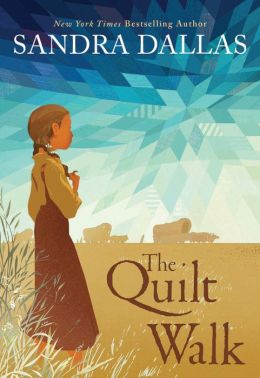
The Quilt Walk

BIBLIOGRAPHY
Dallas, Sandra. 2012. The Quilt Walk. Ann Arbor, MI: Sleeping Bear Press. ISBN: 9781585368006.

BOOK REVIEW
It was1863 when her Pa announced that the family were to pull up roots and head out west to Golden Calorado, and ten-year-old Emmy Blue had mixed feelings. Excitement and adventure waited out west, but she would have to leave her family, friends even her cat in her hometown of Quincy, Illinois. Despite the chance of never seeing their loved ones again the Hatchett family started out on the Overland Trail to start a new life where the Colorado Gold Rush is in full swing. In attempts to make her a proper young lady and seamstress despite being so far away, Emmy Blue's grandmore gives her a parcel of fabric pieces that would create a minature log cabin quilt that could be stitched during her journey. Though extremely reluctant at first Emmy Blue grows to secretly enjoy quilting to the point that she would walk along the family wagon with her Aunt Catherine and stitch. Told through a child's eyes the historical details are effortelss written into the story that range from how diverse groups of families scarifice many things like their possessions to make the arduous journey to these groups make friends, facing accidents and death, families turning back to return their original homes, and the fears of encountering the American Indians. The book also wonderfully illustrateds the time period's gender roles, especially for women who "have a duty to their husband[s]" but who are also strong, brave, and educted. The encompassing theme of quilting, and how a wuilt itself can tell a story, is something that is typically focused on in a book about America's westward expansion and is a welcomed sight. Based on true events of a pioneer family, Sandra Dallas' first children's book is a beautifully stitched together book that is perfect for library collections and book clubs.

CONNECTIONS
  • Ask the children how they would feel if their parents announced that they were leaving many things behind and moving to some place brand new.
  • Ask the children for their thoughts on the roles of the adults and children during the journey west.
    • Subsquently, ask them for thoughts on gender roles.
  • Share books that have colored images of quilts, especially ones that were made during the 19th century.
  • Share books about pioneers.
  • Have the children create their own quilting block, which can be done on paper and drawing or you can go the whole way and sew a block.


Friday, May 25, 2012

Nancy Clancy Super Sleuth

BIBLIOGRAPHY
O'Connor, Jane. 2012. Nancy Clancy, Super Sleuth. Illus. by Robin Preiss Glasser. NY, NY: Harper (HarperCollinsPublishers). ISBN: 9780062082930.

BOOK REVIEW
Our Fancy Nancy has grown up! In her first ever chapter book, Nancy and her best friend Bree, inspired by the famous literary detective herself - Nancy Drew, are now sleuths in need of a mystery to solve. Soon enough a mystery hits their classroom, and they dawn their totally professional trench coats and grab their magnifying glasses, which are quite fancy looking, and get to work uncovering the culprit. As with any great detective story, a top-secret code, complete with answer key, is a fun element for readers to discover and try out in their own mysteries. O'Connor's continues her excellent skill of weaving in new vocabulary words, as done in her previous Nancy books, which is parents will greatly appreciate. The black and white illustrations are just as fun as the previous books and make the book complete. As a whole, the book gives the readers the great element of still being fancy, but also being smart, polite, and adventurous, which is always refreshing. Nancy Clancy, Super Sleuth is a surefire, that means fabulously perfect, read for young readers who have graduated from the Beginning Reader books but need a friendly character to welcome them to real chapter books and new adventures! Looking forward to more in the series!

CONNECTIONS

  • Ask the children how they would have felt if their sibling was a suspect/culprit of a mystery.
  • Have the children create their own fancy detective outfits and have them solve a mystery! The mystery could be something as simple as a mystery memento project like the one in the story.
  • Introduce to the children another super sleuth, Nancy Drew. Read, together, one of her famous novels and do an activity based off of it!  

Monday, January 30, 2012

Betsy Ross

BIBLIOGRAPHY
White, Becky. 2011. Betsy Ross. Illus Megan Lloyd. NY: Holiday House. ISBN: 9780823419081.

BOOK REVIEW
You open and read. Read, read. You grin. Grin, grin. Becky White's simple rhyming poem is an excellent book on a not-so-common story: the story of Betsy Ross sewing the first American flag. White captures the method of creating the flag with snip, snip and a rib, rib and straight to indigo dye drip, dripping. Those who are familiar with the American flag will soon enough know what Betsy is sewing toward the end of the book. Lloyd's quilted illustrations are wonderfully fitting. Using fabric and embroidery floss every image is handmade and matches the clean poem. End notes from the author and illustrator are found in the back with the instructions on how to cut a star from fabric the way Betsy Ross would have done. A title to include in any collection, but especially for a Fourth of July collection that needs a boost in great story books for young readers. All in all, a perfect book.

CONNECTIONS
  • Provide scraps of fabric and have the children try making their own Betsy Ross star.
  • For older children, have them sew their own flag out of scraps of fabric by hand.
  • For a poetry break, read this book!


Friday, January 20, 2012

I'm Not.

BIBLIOGRAPHY
Smallcomb, Pam. 2011. I'm Not. Illus. by Robert Weinstock. NY: Schwartz & Wade. ISBN: 9780375861154.

BOOK REVIEW
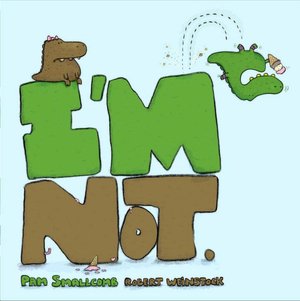
"She's not one single big ordinary. And she's a little mysterious." A shy girl says at the beginning of this story. According to her, her best friend and fellow scaly crocodile (or are they little dinosaurs? I'm going with crocs!), Evelyn, can do anything. Evelyn is successful in quirky fashion, can tell amazing stories, is a decorator and artist extraordinaire, and so much more! All the while our nameless narrator says "I'm not.". However, one day she realizes that the things that Evelyn does not have the magic touch for, like spelling,  karate and baking, she does has the touch for! The book ends with a perfect match of two friends, especially when they realize that Evelyn needs "A friend who is always by her side. Though thick and thin. A true-blue friend." and our own new crocodile friend yells, "I am! I am! I am!". To match the charming story is Weinstock's adorable illustrations detailing the differences between the two girls. If readers do not like crocodiles, wait till see these images! This is a amazingly great book to share with young readers (and even the adult readers) who are starting to notice the difference between them and others their age (friends and siblings alike!). This book will tell us all it is OK to be different and that opposites can make the best pair of friends (siblings) ever!

CONNECTIONS
  • Share the story with the readers then ask if they ever had felt the same the way before about a friend of a sibling.
  • Have the children list out what they can do different than their friend, and why it makes them awesome too.
  • Have the debate of whether the characters are crocodiles or dinosaurs! 
  • Have the children share what they would name the story's narrator.

Tuesday, October 25, 2011

Twosomes: Love Poems from the Animal Kingdom

BIBLIOGRAPHY
Singer, Marilyn. 2011. Twosomes: Love Poems from the Animal Kingdom. Illustrated by Lee Widdish. New York: Alfred A. Knopf. ISBN: 9780375867101.

BOOK REVIEW
"Do animals celebrate Valentine's Day?" is the question that one will find on the jacket cover flap. It continues on to say no one knows for sure. However, thanks to children's poet extraordinaire Marilyn Singer's creative little poems found in this book you would be come a firm believer that animals do celebrate love and companionship in their own world. In rhyming couplets, these poems are full of love, humor and puns that will make readers of all ages laugh and giggle. Ranging from household pets (dogs and cats) to wild animals found in your backyard to ones found in Africa (elephants) and to animals found in the sky and in the ocean, there is an poem for each animal lover. Some poems are quite easy to understand, "A sunny day. It's perfect weather / to go outside - and nap together" (Cats), while other poems can make a reader think and can be educational at the same time, "You and I could be a team, / if we agree on a color scheme" (Chameleons) and "I'm finding a leaf. You're taking a bite. / Wait a few weeks and our hearts will take flight." (Caterpillars). Lee Widdish's illustrations compliment the adorableness of the books theme. On each page, a poem has a vignette style picture. The overall presentation for Twosomes is a sweet little package, especially with the book being a small book that is perfect for little hands to hold. A must-have book for any poetry collection.


CONNECTIONS
  • Share this book in class or storytime for Valentine's Day or if you're celebrating animals.
  • When learning about animals, read the poems that may require a little more brain power (chameleons and caterpillars) and then explore info about each animal from nonfiction books. For example, after sharing the caterpillar poem, discuss its life cycle from being a caterpillar that goes into a cocoon that becomes a butterfly. You could even then read The Very Hungry Caterpillar!
  • If your studying poetry, after sharing some poems, have the children create their own two-liners about the animal of their choice.

Saturday, May 28, 2011

Andy Warhol's Colors

BIBLIOGRAPHY
Rubin, Susan Goldman. 2007. Andy Warhol's Colors. Art by Andy Warhol. San Fransisco, CA: Chronicle Books LLC. ISBN: 9780811857215.

BOOK REVIEW
It's never too early to introduce Andy Warhol to your child. Humor aside, this little board book has some great elements that perfect for the beginning of exposing colors and animals to a baby. Rubin picks ten pieces of art from famed Andy Warhol to write her simple text around, like "small green cat just purrs meow," "purple horse is trotting fast", to provide a brief description of the illustration with a focus on the colors. The little pages are filled with bright colors and the art is large and clear enough for little eyes to focus and distinguish. The book ends with a great rhyming stanza, "See the colors bright and bold. Orange, yellow, green, and gold. Pink and blue and all the rest. Which of them do you like best?" that encourages second and third readings in one sitting. A great first book to include in any baby collection, including for parents who are Modern Art lovers.


CONNECTIONS
  • When reading the book remember to point at the pictures and the words and read over and over!
  • Share other board books with your baby that include art such as: Sharing with Renoir by Julie Merberg and Suzanne Bober.

Wednesday, September 15, 2010

Barry the Fish with Fingers

BIBLIOGRAPHY
Hendra, Sue. 2010. Barry the Fish with Fingers. Illus. by Sue Hendra. NY: Alfred A. Knopf. ISBN: 9780375989261.

BOOK REVIEW
What could a fish do if it had fingers? Many things! - according to a round and blue fish named Barry that is. Readers are initially introduced to Sea Slug and all the different type of fishes under the sea, but that story changes focus when Barry appears with bright orange fingers at the end of the fins. With his new phalanges, Barry can play with finger puppets, knit a scarf, play the piano, finger paint and tickle. But perhaps the most important thing that he could do was point and shout a saving warning of "Look out!" when a large box landed on the sea floor. After being saved from being squished, one little green fish ask the question on everyone's mind - "...where can we get some of these fingers?" As it turns out, Barry's amazing digits were not spontaneous fin growth, but fish sticks, and the box that floated down to their world was a crate of "Pirate Jack's Tasty Fish Sticks." Now everyone can have some fun. The overall plot is nothing too deep, and fact that Sea Slug has seen all kinda of fishes under the sea is incidental as the book more for pure entertainment and use of our silly imagination. The colorfully bright and clear gouache illustrations fill the pages. The contrast of a blue Barry and his bright orange and crispy looking fingers is wonderfully humorous, and the children will like all the different type of fishes. Be prepared or the one child in the group to say, "But fish sticks are made from fishes!". A fun read nonetheless for storytime or just during some silly time. Remember to read it with some gusto!

CONNECTIONS
*Have the children share what other things a fish could do with fingers.
*Invite the children to create their own fish with fingers picture
*While reading to a group like in storytime, remember to ask the children questions like "Do fish have fingers?" and etc.
*If you are allowed food in your room, share a small meal of fish sticks (along with some fruit!) *after reading the book.

Monday, July 12, 2010

Nonfiction: Hitler Youth: Growing Up in Hitler's Shadow

This is a reposting of the review for the book Hitler Youth: Growing Up in Hitler's Shadow, which was originally published October 26, 2007 for a course during my MLS degree. This is a great book and I hope that you find it informational!

BIBLIOGRAPHY

Bartoletti, Susan Campbell. (2005). HITLER YOUTH: GROWING UP IN HITLER’S SHADOW. NY: Scholastic Nonfiction/Scholastic, Inc. ISBN: 0439353793.

PLOT SUMMARY
Through the lives of twelve teenagers involved in the Hitler Youth, author Susan Bartoletti tells the powerful and detailed story of how Germany’s children were used to strengthen the Nazi Party and Adolf Hitler’s rise to power during the twelve years of the Third Reich.

CRITICAL ANALYSIS
In her Author’s Note at the end of the book author Susan Bartoletti tells the story of how an article stating that Adolf Hitler and the Nazi Party “‘rode to power on the shoulders of the politically active youth’” had fueled her strong and deep interest in the story of the children living in Germany during the Third Reich. For two years, she visited museums and libraries to pour over books, articles, diaries, and letters to learn more. She even visited Germany to see Berlin and other sites where the Hitler Youth did many of their activities. To finalize her research, Bartoletti interviewed many former members of the organization to hear their personal accounts. To gather further insight of this riveting history, she found stories of Jewish children and youth who lived during the Third Reich. Her goal, she states, is “an attempted to” gain an understanding and to “make sense of the fact that adults taught young people to hate, to kill, and to feel superior over others. After all, the Hitler Youth weren’t born Nazis; they became Nazis” (Bartoletti, p.161-62).

Hitler Youth: Growing Up in Hitler’s Shadow is an extremely well organized. After providing a table of contents, which list the chapter headings, Bartoletti introduced the twelve young people who are in the book by providing their photographs and a brief biographical tidbit that gave their birth year, where they were born and how they were involved in the Hitler Youth. The life of the organization from its beginning to its end is wonderfully illustrated and organized through the ten chapters, which hit on the major events during the twelve years of its existence, for examples the murder of Herbert Norkus, who became a Hitler Youth martyr, the change of the school system, the beginning of the Holocaust, which also includes the discrimination against Germany’s own mentally and physically “unfit” citizens (Bartoletti, p. 93), when Hitler made all remaining eligible children join the Hitler Youth under threat of hard labor at a concentration camp, and when the Allies invaded Germany in 1945.

The chapters also illustrate the progression of the twelve young people’s, as well as hundreds of other children, feeling towards the organization. For example, Helmuth Hubener, Karl-Heinz Schnibbe, and Rudolph (Rudi) Wobbe eagerly joined the Hitler Youth, as did all the children; however, they soon grew tired of the regime and began to listen to the illegal foreign radio stations and began to distribute anti-Nazi leaflets. Another resistance group called the White Rose was lead by another Hans Scholl when he became a medical student at the beginning of the war (Bartoletti, p. 118-19).

The text reads like a story; however it is full of information. To add personal anecdotes to the already gripping information, actual pieces of dialogue from the interviews and correspondence of former members of the organization are included to give the readers a clear insight into the thoughts and feelings of the children as well as their parents. A good example of this is when the Scholl children, Inge, Hans and Sophie, joined the Hitler Youth despite the disapproval of the father, Inge states that they “‘entered into the Hitler Youth with body and soul, […] and we could not understand why [their] father did not approve, why he was not happy and proud…. Sometimes he would compare Hitler with the Pied Piper of Hameline, with his flute, led the children to destruction’” (Bartoletti, p. 30). Despite all of the factual details, having been written in a story-like format with actual pieces of dialogue the book has a constant ease of crystal clear understanding and smooth flow from chapter to another.

Through out the entire book, with at least one on every page, Bartoletti provides black and white photographs depicting what life was like during Nazi Germany. There are pictures of children in uniforms performing all sorts of duties and activities, there are pictures showing the destruction that the Third Reich had caused, as well as members at the time of being captured by American soldiers and pictures of the children performing their punishment labor. The use of these photographs provides the visuals to the at time chilling text, and allows the readers to see the faces and environment that the members live in, letting them know that the Hitler Youth was only made of up children.

The final element to the story of the twelve young people who are in the book is the Epilogue. This rare glimpse into the lives of these people allows the readers to learn what happened to the young people who survived the war and provides their thoughts and feelings of their actions while being members of the Hitler Youth.

There are several of ways to access the information found in this amazing book. The chapter headings and the table of contents is one way for readers to find a specific time or event that is discussed. In the back of the book there is an Index, which provides the page of numbers of various topics within the book. Bartoletti also provides an index of where her quotes came from, a time of the Hitler Youth, and finally a note about the photographs used, explaining that the photographs in the book is only a “sampling of the millions taken during the Third Reich,” and recommends the readers who would like to view more photographs to visit the online collections at the Library Congress and at the United States Holocaust Memorial Museum (p. 163).

With all these amazing educational details and personal anecdotes of the lives of the children during the power of the Third Reich Bartoletti’s Hitler Youth: Growing Up in Hitler’s Shadow is a powerful and captivating book that allows readers of to truly learn about the Hitler Youth through the eyes of its members that were the exact same age. This book will provoke critical thinking and powerful discussions.

BOOK REVIEWS
PUBLISHER WEEKY
Bartoletti (Kids on Strike!) offers a unique and riveting perspective on WWII by focusing on the young people who followed Hitler from 1933-1945. The narrative primarily focuses on members of the Hitler Youth, but also profiles some of the group's dissidents and its Jewish targets. Hitler began his quest for dominance with young people, recognizing them as "a powerful political force" and claiming, "With them I can make a new world." Bartoletti describes how the propaganda of the Hitler Youth attracted children: "The overnight camping trips, campfires, and parades sounded like a great deal of fun," said one 12-year-old. But the organization also emphasized loyalty to the Third Reich above all (including family-one eight-year-old, Elisabeth Vetter, turned in her parents to the Nazis). The author personalizes the war by placing identifiable individuals at the center of the events, such as Sophie Scholl, who moved away from Nazi ideas as a teen and in college joined the "White Rose" group that published pamphlets detailing Nazi evils and urging resistance-a crime for which she and others were executed. Powerful black-and-white photographs testify to the lure and also the cruelty of the Nazis. Bartoletti's portrait of individuals within the Hitler Youth who failed to realize that they served "a mass murderer" is convincing, and while it does not excuse the atrocities, it certainly will allow readers to comprehend the circumstances that led to the formation of Hitler's youngest zealots. Ages 7-10. (Apr.) Copyright 2005 Reed Business Information. (May 23, 2005)

SCHOOL LIBRARY JOURNAL
Gr 5-8-Hitler's plans for the future of Germany relied significantly on its young people, and this excellent history shows how he attempted to carry out his mission with the establishment of the Hitler Youth, or Hitlerjugend, in 1926. With a focus on the years between 1933 and the end of the war in 1945, Bartoletti explains the roles that millions of boys and girls unwittingly played in the horrors of the Third Reich. The book is structured around 12 young individuals and their experiences, which clearly demonstrate how they were victims of leaders who took advantage of their innocence and enthusiasm for evil means. Their stories evolve from patriotic devotion to Hitler and zeal to join, to doubt, confusion, and disillusion. (An epilogue adds a powerful what-became-of-them relevance.) The large period photographs are a primary component and they include Nazi propaganda showing happy and healthy teens as well as the reality of concentration camps and young people with large guns. The final chapter superbly summarizes the weighty significance of this part of the 20th century and challenges young readers to prevent history from repeating itself. Bartoletti lets many of the subjects' words, emotions, and deeds speak for themselves, bringing them together clearly to tell this story unlike anyone else has.-Andrew Medlar, Chicago Public Library, IL Copyright 2005 Reed Business Information. (June 1, 2005)

CONNECTIONS
*Read more books like The Way People Live: Life in the Hitler Youth by Jennifer Keeley to learn more about the Hitler Youth
* Learn about the lives of children during the Second World War with books like Remember World War II: Kids Who Survived Tell Their Stories by Dorinda Makanaonalani Nicholson.
*For those who are interest, learn about the Holocaust with books like A history of the Holocaust by Yehuda Bauer and Nili Keren, and Ten Thousand Children: True Stories Told by Children Who Escaped the Holocaust on the Kindertransport by Anne Fox and Eva Abraham-Podietz
*Open up an opportunity for the young people to have a discussion where they can share their thoughts and opinions on the subject.

Saturday, March 6, 2010

The Year We Disappeared: A Father - Daughter Memoir

BIBLIOGRAPHY
Busby, Cylin and John Busby. 2008. The Year We Disappeared: A Father-Daughter Memoir. NY: Bloomsbury. ISBN: 9781599901411.

BOOK REVIEW
"When my dad dies, his body will go to the Harvard Medical School at Massachusetts General Hospital in Boston, though I suspect they are mostly interested in his head." This is how Cylin Busby starts this compelling memoir in the prologue. One August night in 1979 Cylin and her whole family's lives are dramatically changed forever when her father, a policeman, on his way to work, is brutally shot in the face. Before that night, Cylin was a normal nine-year-old who was grumpy that her dad was not able to take her and her brothers to see The Muppet Movie that night and having fun with friends and pet box turtle. However, now with 24-hour armed protection against the man who shot her dad and may possibly be coming for the rest of things aren't as great. Written in alternating chapters, Cylin and John effectively tell their story from their points-of-view filled with emotional differences: Cylin a confused and scared child as she quickly grows up and John an angry man who is frustrated with the corrupt system and wants revenge. Readers will be caught up in the story from the very beginning as it doesn't waste time getting to the story and its bloody and frightening details. However, as John, while in hospital for numerous surgeries, reminisces to days when he first became a cop, the good men that he worked with, and the instances with local criminals who he knew were involved with his is shooting, which can drag the story on for some readers. Plus, the names of those who were invovled in shooting were changed, which can be confusing to some when doing research outside of the book. Despite the select few slow spots, the readers will stay with the story of the Cylin and John through the raw emotions of the horrible crime and its aftermath up to the very end when they begin their new life. A "where they are now" epilogue is included and helps answer one important question: Do the Busbys ever get justice and the perpetrators are caught? An engrossing and unique memoir that is a great edition to all teen library collections.

CONNECTIONS
*Encourage the readers to learn John Busby and his support of bill to extend the statue of limitations, which directly involves his case as it rain out by the time those involved in his shooting confessed.
*Encourage them to share in what they would've felt like if they were in both Clyn and John's shoes.
*Encourage them to discuss what they thought about the police and justice system years ago. Have things stayed the same or have they changed?

The Black Book of Colors

BIBLIOGRAPHY
Cottin, Menena and Rosana Faría. 2006. The Black Book Of Colors. Trans. by Elisa Amado (English) and CNIB (Braille). Toronto; Berkeley, CA: Groundwood Books/House of Anansi Press. ISBN: 9780888998736.

BOOK REVIEW
How would you describe colors if you couldn't see? In Cottin and Faría's innovative book The Black Book of Colors wonderfully shows us how. Thomas, an unseen boy, describes the colors through his five senses of sight, taste, smell, touch, and hearing. Each color is beautifully described. To him the color red is "sour like unripe strawberries and sweet as watermelon. It hurts when he finds it on his scraped knee," green "tastes like lemon ice cream and smells like grass that's just been cut," and yellow "taste's like mustard, but is soft as a baby chick's feathers." The best and ingenious feature of this book is the choice of format and color. The book's only color beyond the white text is black. For each double-page spread one page is dedicated to words and the other two the "illustrations." The illustrations are actually glossy embossed images, e.g. strawberries for the color red, feathers for yellow, rain waves of fine lines to describe the flowing black hair of Thomas' mom. The glossy parts of the page catch the light enough for you to see what the images are and entices you (and you will not be able to resist) to put your fingertips all over the page. Along with the white text, the book also includes a Braille translation that allows even visually impaired readers to enjoy the read. At the end of the book a Braille alphabet is provide to further help educate those new to Braille. This is a wonderful book to use in a classroom setting to teach the concept of how people who are visually impaired can read and also a great way to think about how to describe colors and everyday things. It is also a simple yet creative way to start kids to think about things in another perspective. A highly recommended book for public and school libraries.

CONNECTIONS
*After the story is told, encourage the kids to take turns feeling all the pages in the book. Even ask them to close their eyes when they do.
*Have the kids describe what each color is like as Thomas does in the book.

Monday, November 9, 2009

The Last Thing I Remember

BIBLIOGRAPHY
Klavan, Andrew. 2009. The Last Thing I Remember. Nashville, Tenn.: Thomas Nelson. ISBN: 978595546074.

BOOK REVIEW
"It was an ordinary day," high schooler Charlie West told himself as he tries to remember. But he doesn't remember much. His memory of what had happened between going to bed one night and waking up to a chair in a torture chamber with bloodied instruments is vague if not completely non-existent. After escaping his mysterious captors only to be caught by police who tell him that he is a convicted murderer of his former best friend one year prior, Charlie is one the run of his life as he tries to piece together what happened. All the while he tries to stop the assassination plot against the Secretary of Homeland security by a secret terrorist organization whose members call Charlie one of their own. Edgar Award-winning author, Klavan's debut Young Adult novel presents a post 9/11 thriller dealing with a terrorist group hidden among the American homelands. Though some readers may find him too clean-cut and all-American for comfort, Charlie brings a patriotic character to the teen boy literature subgenre and brings plenty of action being a black belt in karate. While the narrative may be dry in some areas readers will be caught up in the currently unsolved mystery of what exactly happened to Charlie during that missing year and will leave them waiting for the next book in the new Homelander series to come out. Included in the back are discussions questions that allows for future discussions great for a classroom or library book club setting.

CONNECTIONS
*
Use the provided questions to encourage discussion about the book and character on top of creating your own.
*
Allow the readers to comment about their likes and dislikes about the book.

Sunday, September 20, 2009

For Me?

BIBLIOGRAPHY
van Straaten, Harmen. 2007. For Me?. Trans. by MaryChris Bradley. NY: NorthSouth Books. ISBN: 09780735821637.

BOOK REVIEW
When Duck discovers that someone had left him a rose and a note with only a heart drawn on it he takes it to his friend Toad. Toad as well as their other friends and neighbors, Otter and Hedgehog, also got the same mysterious doorstep gift. "What do you think it means?" they all ask and they begin to theorize that who the giver is and that perhaps one of them is in love. It is only until a someone arrives at the house do they find out who had given them the presents and why. Harmen Van Straaten's watercolor illustrations that have a combination of subtle color changes to the background and the characteristics of the four friends add touches of whimsy and charm to this all ready lovely story. Young readers will especially like Duck's hat. For Me? is a fun book about friendship that would appeal to all readers.

CONNECTION
*Ask the children how they would say "Hi" to their new neighbors when they just move to a new home.
*What would they think if they received a single flower and a note on their doorstep?

Saturday, August 22, 2009

Marked - House of Night Series

BIBLIOGRAPHY
Cast, P.C. and Kristin Cast. 2007. Marked. NY: St. Martin’s Griffin. ISBN: 9780312360269.

BOOK REVIEW
Changes in life can be hard, especially if you are unexpectedly “marked” as a fledgling vampyre and have to change schools. Leaving her friends, boyfriend and not-so-nice family behind, Zoey begins her new life as a fledgling at the House of Night to learn to become an adult vampyre. Of course, that is if she makes it through the change, which not all do. On top of a new school and making new friends, Zoey discovers that she has been chosen to have a special connection with the vampyre Goddess Nyx and rapidly develops new powers that fledglings normally don’t have. Life at the House of Nights gets mysterious when she discovers that the leader of the Dark Daughters is misusing her powers and she must set things right. As a mother and daughter team, P.C. and Krisitn Cast’s writing has the exciting and humorous touch of how teenagers would speak and think. Along with the usual dramas of teenage life Marked is also includes with mysteries and great action. The unique touches to the vampires themselves, especially the tattoos they develop as an adult vamp (or in Zoey’s case when the Goddess Nyx is pleased with her actions), their history, and bloodlusts that develops when feeding on others, adds to the new views of vampires in literature. Set in their hometown of Tulsa, OK, the authors also include well-rounded characters who are friends, or enemies, of Zoey and allow references to pop culture to make them more real to the readers. Being the first book of the currently five-book House of Night series about Zoey’s life and continuously unique drama that is full of twists and turns, Marked is growing in popularity and competition among the ranks of vampire literature and is an extremely welcomed addition to the subgenre and will draw the readers in.

CONNECTION
*Continue to follow Zoey’s story with the other books in the House of Night series: Betrayed, Chosen, Untamed, Hunted and Tempted (coming October 2009).
*Have a House of Night event and let the participants create their own tattoos.

Saturday, August 8, 2009

Grumpy Cat

BIBLIOGRAPHY
Techentrup, Britta. 2008. Grumpy Cat. NY: Boxer Books. ISBN: 9781905417698.

*A 2009 Texas 2x2 Book*

BOOK REVIEW
Cat is grumpy. He sits between his trash cans alone, he eats alone, and he sleeps alone. However, Cat is also a lonely cat as he doesn't know how to join the other cats to play. Then when night, during a thunderstorm that leaves him wet and cold, a Kitten appears. Despite still being grumpy and trying to lose her, all of the brown and black stripped Cat is constantly followed by his new and unwanted friend Kitten. The orange and brown stripped kitten tries to play with him, wiggles her tail under his nose, pulls his tail and shows him her soft tummy. However, Cat is still grumpy until Kitten nearly falls out of a tree. This is a short and simple story of how a friendship is formed that young readers will like. The illustratrions are a combination of bold and soft and are graphically tectured what brings to mind that of other artists like Eric Carle, though less bold and colorful and more realistic. The young readers will like the grumpy look of Cat and the playfullness of Kitten. With the combination of the oversize bookform, lovely illustrations, and the clean text, young readers are sure to enjoy.

CONNECTION
*Ask the readers if they were ever grumpy until one of their friends came to visit or when a new friend came a long.

Dinosuar Starts School

BIBLIOGRAPHY
Edwards, Pamela Duncan. 2008. Dinosaur Starts School. Illus. by Deborah Allwright. Morton Grove, Ill: Albert Whitman & Company. ISBN: 9780807516003.

BOOK REVIEW
It's the first day of school and Dinosaur, a bright orangey-red Stegosaurus, is full of worry and doesn't want to go. However, his little human companion offers him reassurance. The story is cleverly written through a series of "What if..." questions like "What if you were painting pictures of the sun but Dinosaur made a big mess? What if his bight dinosaur eyes filled with tears and he began to cry?" and "What if it was time for lunch but Dinosaur said in his worried dinosaur voice, 'They might give us something yucky to eat.'" All the while, his friend offers answers to all the questions and makes Dinosaur at ease until they meet new friends another boy with a Triceratops who also are struggling with the first day of school. The illustrations are colorful and charming. All the children wear an array fun, retro style clothes and are an mixture of skin tones and hair styles (the young friend of dinosaur has a cool up-swoop hairdo). The pages are filled with color and action that will equally entertain the readers. This is an endearing story of the first-day-of-school jitters that many children will relate to, especially to those who love dinosaurs or have an imaginary animal friend. This is a must for all public and school libraries and is perfect for a storytime.

CONNECTION
*Ask the children if they had a dinosaur who started school, what would you tell them if they were scared? What type of dinosaur would it be?
*Do a dinosaur craft.
*Other stories about going to school like Wemberly Worried by Kevin Henkes and How do Dinosaurs Go to School? by Jane Yolen and illus. by Mark Teague.