Showing posts with label Poetry Breaks. Show all posts

Tuesday, July 29, 2014

Kite Flying - A Poetry Break


INTRODUCTION
Do you wish that you could just get away? Do you dream of going and visiting other places? Or do you prefer to stay put? Do you need a little nudging and encouragement to do something? I know that I'm all of the above at different points in time. This wonderful little short poem illustrates a great imagination (is it really possible for a kite to take you away? Boy, I wish it could!), but also shows that even though you did not plan on going somewhere or doing anything that you can learn to love it.


POEM
I flew a kite down by the sea,
until, that is, the kite flew me!
It tugged me high into the sky.
I held on tight and learned to fly!
I felt so free, so featherlight,
flying the world, just me and Kite.

CONNECTIONS
  • Ask the children if a kite could really take them away somewhere? Is this poem an example of using your imagination? 
  • Ask the children where would they go if a kite took them flying? What city? What state? What country? To see someone? And ask them why?
  • Ask the children to name their traveling kite. Why did they chose that name? 
  • Let the children create their own kite: 

BIBLIOGRAPHY
Outside the Box: A Book of Poems written by Karma Wilson and illus. by Diane Goode. New York, NY: Margaret K. McElderry Books (Simon & Schuster Children's Publishing Division). 2014. ISBN: 9781416980056.


Wednesday, August 22, 2012

My Elephant Paints Pictures - A Poetry Break

INTRODUCTION
As I prepare for my upcoming storytime season one day I was diving into the world of amazing animals. One of them is the elephant. They are not just large grey animals with a silly, long nose. Like other animals, they are incredibly smart and caring animals. They can also be artists! Before you share this poem ask the children what they know about an elephant. What can it do? Then ask if they know that elephants can paint. It'll be fun to hear their answers!


POEM
My Elephant Paints Pictures
by Jack Prelutsky 
My elephant paints pictures,
Gems of color, shape, and line,
Aesthetically superior
To every one of mine.
His drawings are exemplares
Of fluidity and grace.
I scribble worthless doodles
I should probably erase.
He shapes exquisite statues
Using nothing but his trunk.
I sculpt atrocious eyesores,
Unadulterated junk.
Though I lack his native talent,
Nonetheless I'm sort of smart,
So I've started taking lessons
From my elephant ... in art.

CONNECTIONS
  • Share this poem with the book Elephants Can Paint Too! written and photographs by Katya Arnold. 
  • Show a video of an elephant painting. You should be able to find some on YouTube.
  • Have the children try to paint a picture with either their paint brush held between their teeth or with their arm in front of them by their nose to simulate painting like an elephant. Or they can do bother methods! 

BIBLIOGRAPHY
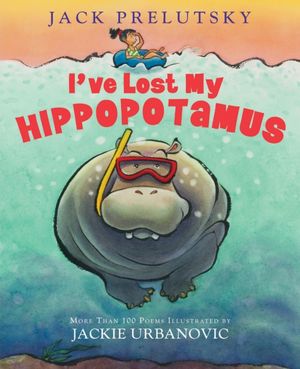
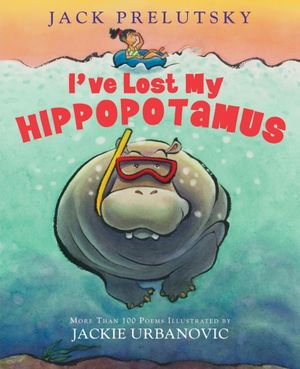
Prelutsky, Jack. 2012. I've Lost My Hippopotamus. Illus. by Jackie Urbanovic. NY, NY: Greenwillow Books (HarperCollinsPublishers). ISBN: 9780062014573.

Wednesday, May 30, 2012

I've Lost My Hippopotamus - A Poetry Break

INTRODUCTION
You should never lose your imagination. Ever. I read this poem while looking through poet's Jack Prelutsky's new book I've Lost My Hippopotamus and loved this poem because of the imagination and how it can inspire the reader to use his or hers to find out where is that silly hippo! Share this poem with a visual aid - yep, a photo or two of a hippopotamus!


POEM
I've Lost My Hippopotamus
by Jack Prelutsky 
I've lost my hippopotamus,
The situation's weird.
One minute she was next to me,
Then poof! she disappeared.
It's hard to lose a hippo,
For a hippo's truly huge-
I'm sensing something fishy,
Some unsavory subterfuge.
I've searched and searched with no success,
I've yet to find a clue
To her status or location,
I'm unsure of what to do.
If you spot a hippopotamus
Where usually there's none,
Please let me know, the odds are good
You've found my missing one.

EXTENSIONS


  • Ask the children where they think the hippopotamus could have disappeared to, and let them share their ideas.
  • Ask if anyone has ever had an imaginary animal, and let them share it.


BIBLIOGRAPHY
Prelutsky, Jack. 2012. I've Lost My Hippopotamus. Illus. by Jackie Urbanovic. NY, NY: Greenwillow Books (HarperCollinsPublishers). ISBN: 9780062014573.

Monday, April 30, 2012

Hot Dog - A Poetry Break

INTRODUCTION
So, it's baseball season again! This poem isn't necessarily about the classic American sport, but what you can :: eat :: during a ball game.... hot dogs! Yum! This poetry break requires some delectable hot dogs to eat - complete with all the trimmings! This poem would also work for a picnic session too.


POEM
Hot Dog
by Mordicai Gerstein

Dear hot dog..........................with relish and a blanket
snug as a puppy.....................of crimson ketchup.
in your bready bun,.............. .You are so fragrant,
I love you.............................. .I could
mustard..................................eat
up and down........................ ..you
your ticklish tummy,............  ..up!
and cover you up

EXTENSION
  • Have the children deck out a hot dog and eat it up (it's a must!)
  • Encourage the children to share what they love about hot dogs.
  • For the baseball season, have the children share what they like about the sport and what they eat at a game.

BIBLIOGRAPHYY
Gerstein, Mordicai. 2011. Dear Hot Dog. Illus. by Mordicai Gerstein. NY, NY: Abrams Books for Young Readers. ISBN: 9780810997325.

Friday, April 20, 2012

Pineapple - A Poetry Break


INTRODUCTION
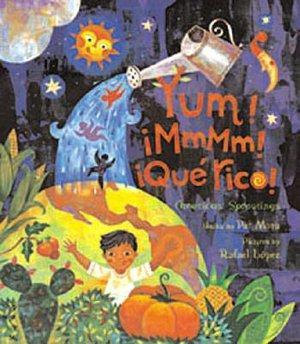
It’s time for a funny “holiday” poetry break! April 20th is National Upside Down Pineapple Cake Day! Yes, there is actually a day for this delectable dessert, and now I am able to pull a haiku poem from Pat Mora’s Yum! Mmmm! Que rico!: Americas’ Sproutings book! Share this poem and have a some fresh pineapples for tasting!


POEM
Pineapple
by Pat Mora

A stuff, spiky hat
on thick prickly skin, inside
hide syrupy rings.

EXTENSION
  • Have the children help bake a upside down pineapple cake in the kitchen with plenty of adult supervision.
  • If you have fresh pineapple for eating, have the children prep the tops for growing a new pineapple plant.
  • Let the children share what they like and don’t like about the fruit.

BIBLIOGRAPHY
Mora, Pat2007. Yum! Mmmm! Que rico!: Americas’ Sproutings. Illus. by Rafael Lopez. NY, NY: Lee & Low Books, Inc. ISBN: 9781584302711.

Wednesday, April 18, 2012

T. Rex Tag - A Poetry Break

INTRODUCTION
Have you ever thought what dinosaurs did for fun? What games did they play? Which other dinosaurs did they play with? If they ate their friends? Yes, ate them. This poem is a lot of fun to read. Before you share the poem ask the children if they have played tag and what do you do when you do play the game. Then ask if they think dinosaurs could play tag back in the day.


 POEM
T. Rex Tag
by Robert Weinstock

I didn't mean to eat my friends,
But...Yum...I munched them all.
They came to quite delicious ends-
So tasty, sweet, and small!

I gobbled Fern eight hours ago,
And chomped Earl yesterday.
I can't recall when I ate Flo.
Now no one's left to play.

I never knew a game of tag
Alone would stink this bad.
I'm always "It"! It's such a drag,
I snarfed the friends I had.

EXTENSION
  • Ask the children what they thought of the poem. Was it silly and funny?
  • Have the children imagine other outdoor games dinosaurs could've played and let them share their ideas.

BIBLIOGRAPHY
Weinstock, Robert. 2010. Can You Dig It? And Other Poems. Illus. by Robert Weinstock. NY, NY: Disney-Hyperion Books. ISBN: 9781423122081.

Friday, April 13, 2012

Decisions, Decisions - A Poetry Break


INTRODUCTION
This is an excellent poem to share on various topics like President’s Day (February 18), Thomas Jefferson’s Birthday (April 13), and Inventors Day (November 9). Today we’re celebrating Thomas Jefferson’s 269th birthday.


POEM
Decisions, Decisions
(Thomas Jefferson, 1801-9)
 by Susan Katz

Thomas Jefferson designed

a rope apparatus that shifted his bed
…up to the ceiling
Or down to the floor;

a two-faced clock that he could see
…inside the house
or outside the house;

a swivel chair so he could swirl
…to his right
or to his left;

a dumbwaiter that hauled his drinks
…down to the cellar
or back upstairs;

a door on a pivot that he could swing
…open to the dining room
or open to the passage;

a revolving stand so he could read
…five books
…at one time.

A cleverer man you couldn’t find,
…but somewhat unable
to make up his mind.

EXTENSION
  • Share more fun facts about this founding father.
  • Have the children pick facts that they like about Jefferson and have them create a list poem.

BIBLIOGRAPHY
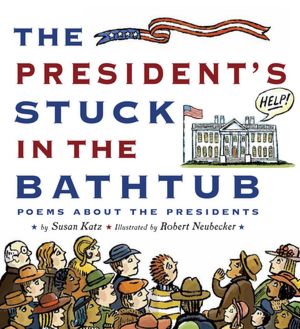
Katz, Susan. 2012. The President’s Stuck in the Bathtub: Poems About the Presidents. Illus. by Robert Neubecker. NY, NY: Clarion Books. ISBN: 9780547182216.

EXTRA TIDBIT
Here is the footnote that accompanied this poem:
Thomas Jefferson played role in the design of many inventions, often improving upon other people’s ideas. His contributions included an octagonal house, a polygraph machine for writing several copies of a letter simultaneously, a ladder that folded up into a pole, and a wheel cipher for using secret codes (a version of which was used until World War II, nearly a century and a half later).

Tuesday, April 10, 2012

Twindependent - A Poetry Break


INTRODUCTION
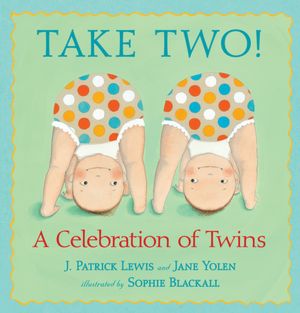
Today (April 10) is National Siblings Day. Some may have an older/younger brother or sister or both. Some may not. Some may be from a set of multiples. J. Patrick Lewis and Jane Yolen created a new poetry book that celebrates those who are twins. In fact, J. Patrick Lewis is a twin himself! Sometimes people think that twins are similar in many ways. That can be but, then again, it may not. This poem is about the differences between the twins. You can share this poem with other ones from books like Kristine O’Connell George’s Emma Dilemma: Big Sister Poems.


POEM
Twindependent
By J. Patrick Lewis and Jane Yolen

I am I,
I am not you.
I live apart.
Do you live, too,
With dreams and hopes
That are your own?
We will be two
When fully grown?

I want to be
an astronaut.
You want to live
Where it is hot.
I long for silence,
You for noise.
You play with dolls,
Planes are my toys.

I am I,
A thing apart,
Although we share
Our mother’s heart,
Our father’s , too,
And in our way
Our genes and all
Our DNA.

But in each
Personality
We are as one
As we can be.

EXTENSION
  • Have the children who share their differences and similarities between them and their siblings. If a child is an only child have them imagine the differences and similarities that he or she would share if there was a sibling.
BIBLIOGRAPHY
Lewis, J. Patrick and Jane Yolen. 2012. Take Two!: A Celebration of Twins. Illus. by Sophie Blackall. Somerville, Mass: Candlewick Press. ISBN: 9780763637026.

Sunday, April 8, 2012

There Isn't Time! - A Poetry Break


INTRODUCTION
Everyone, of all ages, would understand the concept of running out of time or just not enough time at all to anything that you really want to do. Adults know. Kids know it.

POEM
There Isn’t Time!
By Eleanor Farjeon

There isn’t time, there isn’t time
To do the things I want to do,
With all the mountain-tops to climb,
And all the woods to wander through,
And all the seas to sail upon,
And everywhere there is to go,
And all the people, every one
Who live upon the earth, to know.
There’s only time, there’s only time
To know a few, and do a few,
And then sit down and make a rhyme
About the rest I want to do.

EXTENSION
  • Have the children share what they would love to do if they had all the time in the world. They can make a collage or list (regular or poetic), and present it to everyone else.

BIBLIOGRAPHY
Hopkins, Lee Bennet (sel.) 1993. It’s About Time! Illus. by Matt Novak. NY, NY: Simon & Schuster Books for Young Readers. ISBN: 0671785125.

Saturday, April 7, 2012

Hatbox - A Poetry Break


INTRODUCTION
In my opinion Abraham Lincoln is my favorite president and has been since I was real little. Thus, I could not resist creating a poetry break for him. Plus, the poem’s subject is fascinating! This would be perfect to read for Lincoln’s birthday (February 12), President’s Day (February 18), a fun session on hats or concrete/shape poems! Make sure you have pictures of the stovepipe hat to show!


POEM
Hatbox
(Abraham Lincoln, 1861-65)
By Susan Katz

... …Abraham Lincoln wore
... …a hat as tall and skinny
.. .…as he was. More than
... …ornament for his head,
... …this president used is
... …hat instead for carrying
... …papers-his letters, bills,
... …or legal documents like
... …will. Messy fragments
... …spilled everywhere, his
... …written scraps tumbling
... …over his hair. Wasn’t it
apt-for thoughts that set the world
ablaze to be store in a stovepipe hat!

EXTENSION
  • Share other concrete/shape poems with the children, and have them try out writing their own.
  • Share more information about Abraham Lincoln, and have the children share what they like about the president, especially in poetic form!

BIBLIOGRAPHY
Katz, Susan. 2012. The President’s Stuck in the Bathtub: Poems About the Presidents. Illus. by Robert Neubecker. NY, NY: Clarion Books. ISBN: 9780547182216.

EXTRA TIDBIT
Here is the footnote that accompanied this poem:
To avoid losing his papers, Abraham Lincoln stuffed them into his hat. A Story is told that he once bought a new hat and forgot to answer a letter because he’d left it in his old hat. When Lincoln’s actual stovepipe hat was sent to Chicago for an exhibit of Lincoln artifacts in 1997, it was considered so valuable that it arrived no only carefully padded and crated but accompanied by an armed escort.

Friday, April 6, 2012

Waggle Dance - A Poetry Break


INTRODUCTION
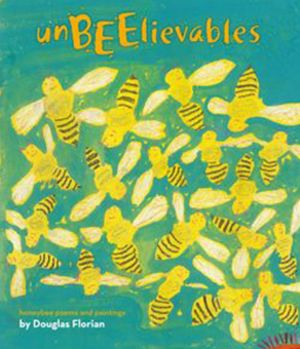
Honeybees are amazing creatures, and Florian’s new poetry book hits all the fun facts. One of the coolest facts (other than honey is technically bee vomit… no, I’m not kidding!) is that the bees do a little jig to tell others in the hive that there is pollen to harvest.  This poem is perfect for a science/nature lesson about bees. The poem could be even paired with others from the book to talk about the cycle of flower pollination. Additionally, if you could show a video show the bees’ dance will it would be great!


POEM
Waggle Dance
By Douglas Florian

We dance. We prance.
            We waggle. We wiggle.
Come glance at our stance
            While we jiggle and wriggle.
Our dance round and round
            Shows where flowers are found.
And our figure eights
            Show where pollen awaits.

EXTENSION
  • Have the children share what they would do if they were bees and found pollen. Would they dance too?
  • Have the children describe their favorite facts about bees, and offer the option for them to write it in poetic form.

BIBLIOGRAPHY
Florian, Douglas. 2012. UnBEElievables: Honeybee poems and Paintings. Illus. by Douglas Florian. NY, NY: Beach Lane Books (Simon & Schuster Children’s Publishing Division). ISBN: 9781442426528.

Thursday, April 5, 2012

Questions - A Poetry Break

INTRODUCTION
When, how, and why? There are so many questions in the universe. Sometimes there are answers and sometimes there are not. Sometimes they make sense (even if there isn't an answer) and sometimes they are nonsensical. This poem is all about questions. Though the reader or listeners may not know the entire purpose of this poem, this one is still great in the fact that it begins to make you think and... question!


POEM
Questions
by Stephen Mitchell


How many inches in a year?
What makes a zero disappear?
And which is older: there or here?


How long must circles spin around?
What stars are in the lost-and-found?
Why can't a mirror make a sound?


What language is the letter Y?
Who taught the hummingbird to fly?
When you are dreaming, where am I?


EXTENSION
  • After reading this poem have the children try to answer any of the questions that were presented. It will be a great display to share to see what everyone came up with (Parents' Night, anyone?!)
  • Have the children come up with their own question(s) and have them write a poem about it.
  • Have the children come up with their questions but then see if anyone else can help find the answers.

BIBLIOGRAPHY
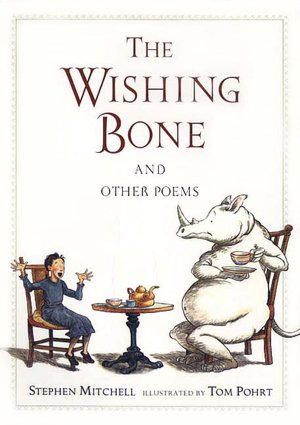
Mitchell, Stephen. 2003. The Wishing Bone and Other Poems. Illus. by Tom Pohrt. Cambridge, Mass: Candlewick Press. ISBN: 0763611182.

Wednesday, April 4, 2012

Honeysuckle Hunting - A Poetry Break


INTRODUCTION
Did you ever have a favorite plant in your backyard or neighborhood? A plant that was edible? I had honeysuckle and mint. Sounds lovely, yes? This poem could go well with a session on flowers and as well as food. To prep for this poem reading make sure you have pictures of honeysuckle to show the children!


POEM
Honeysuckle Hunting
by Heidi Mordhorst

It could be anywhere.
We stand stock still and sniff
the green breathing of daisy, vine and leaf.

Ears pricked and noises high,
we listen for the drowsy hum
of yellow golden honey.

There, on the fence!
We'll steal it from the bees,
pluck a tiny trumpet blossom,

pinch the end with finger and thumb,
like biting the vanilla-dripping tip
of an ice-cream cone.

Slowly, slowly, draw it out-
pull the stamen through, tongue poised
to catch one crystal drop of sweetness.

EXTENSION
  • Ask the children if they have a plant like a honeysuckle.
  • If possible, have honeysuckle available in the room or if you could go to a park where there are some for the children to taste.
  • If you were doing a flower or garden food program, have a lovely picnic with fruits and edible flowers salad. Be adventurous!

BIBLIOGRAPHY
Mordhorst, Heidi. 2005. Squeeze: Poems from a Juicy Universe. Photographs by Jesse Torrey. Honesdale, Penn: Wordsong. ISBN: 1590782925.


Wednesday, January 18, 2012

Staircase to the Moon - A Poetry Break

INTRODUCTION
I had the great misfortune to overhear a staff member tell a mother and daughter that if they cannot find a poem for a middle school project they could try downstairs in the adult nonfiction collection! :: Stop aching my heart! :: What made it worse was the shelver knew I (the Children's Librarian) was there and had never refer the transaction to me; but that is beside the point here. There are many, many, MANY children's poets out there and many of their poems can be perfect for a school project!

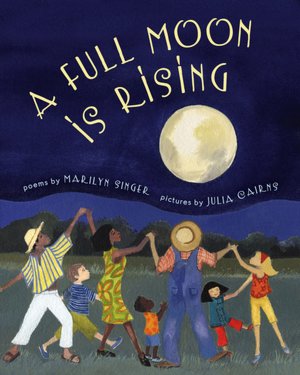
This poem, by the great Marilyn Singer, is from a collection of poems about the great orb in the night sky - the moon - as seen from around the world. Amazing work. This poem, and book, would be great for those in a Geography course or Multicultural course.


POEM
Staircase to the Moon 
Broome, Australia
by Marilyn Singer

Under the sea, divers find pearls,
though non as big and round
....as that jewel up high.
Its glow builds a magic staircase
....from the mudflats to the sky.
Can someone climb and pluck that gem?
Our silly little cousins
....dare themselves to try. 


EXTENSION
  • In the back of the book there is an explanation for each poem. Share the story behind the poem above.
  • For those learning about Australia share this poem and its story then explore more about the pearls that comes from this little town.
  • Have the children find something that makes their town/city/community unique and have them write a poem about the characteristic they picked.

BIBLIOGRAPHY
Singer, Marilyn. 2011. A Full Moon is Rising. Illus. by Julia Cairns. NY: Lee & Low Books Inc. ISBN: 9781600603648.

EXTRA TIDBIT
Here's an great extra tidbit for you folks! It's the story behind the poem. I thought it was so nifty cool that I had to share it! I really want to see this phenomenon now!

Broome, in the northwestern region of Australia, is a small town famous for its pearls and for a natural phenomenon called the Staircase to the Moon. Along Broome's coast are mudflats, lands that are left bare at low tides. When a full moon shines on the exposed mudflats, it creates the image of a staircase leading up to the moon through the sky. People from all over the world visit the town to view the "staircase," which can be seen for three nights each month from March to October.  ~ Marilyn Singer, A Full Moon is Rising.

Sunday, March 20, 2011

The Clock's Gone Cuckoo! - A Poetry Break

INTRODUCTION
I don't know about you but Daylight Savings Time in the Spring (you know, when we have to spring forward one hour) throws me for a loop! This is an excellent poem to share with children who are learning about this time confusion (or may even be feeling it too!).


POEM

The Clock's Gone Cuckoo!
(A Daylight Savings Poem)
by Jenny Whitehead

They say we lost an hour.
I'm not sure where it went.
Our clocks are all mixed up-
My head feels like cement.

Down the stairs I stumble-
Hey, who turned on the sun?
Dad's newspaper is sideways,
His shave is halfway done.

Look! Mom's pouring cat food
In all our breakfast bowls.
My sister's twisted sweater
Has mismatched buttonholes!

Luckily, this strange time change
Starts quietly on Sunday.
Imagine what could happen
It it started on a Monday!

EXTENSION

Ask the kids what they think of the Daylight Savings Time, and what would they think would happen if it really did start on a Monday instead of Sunday. Remember to tell them that Benjamin Franklin came up the DST concept (wouldn't you love to see what the kids responses to that will be!?). Of course, also invite the children to write a poem about what their ideas are for DST!

BIBLIOGRAPHY
Whitehead, Jenny. 2007. Holiday Stew: A Kids Portion of Holiday and Seasonal Poems. NY: Henry Holt and Company, LLC. ISBN: 9780805077155.

Saturday, March 5, 2011

Yes, It Was My Grandmother - A Poetry Break

INTRODUCTION
March is National Women's History Month! As part of the celebration of women throughout is the ages is to reflect on those who are closest to you. This is a great poem about knowing that you share characteristics as your own grandmother who did things that were not necessarily lady-like. Share this poem with some historical pictures of cowgirls and wild horses. Remember to bring a picture of your grandmas too!


POEM

Yes, It Was My Grandmother
by Luci Tapahonso

Yes, it was my grandmother
who trained wild horses for pleasure and pay.
People knew of her, saying:
.....................She knows how to handle them
.....................Horses obey that woman.

She worked,
skirts flying hair tied securely in the wind and dust.
she rode those animals hard and was thrown,
time and time again.
She worked until they were meek
and wanting to please.
.....................She came home at dusk,
.....................tired and dusty,
.....................smelling of sweat and horses.

She couldn't cook,
my father said smiling,
your grandmother hated to cook.

.....................Oh Grandmother,
.....................who freed me from cooking,
.....................Grandmother, you must have made sure
.....................I met a man who wouldn't share the kitchen.

.....................I am small like you and
.....................do not protect my careless hair
.....................from wind or rain - it tangles often,
.....................Grandma, and it is wild and untrained.

EXTENSION
Invite ahead of time children to bring a picture or two of their grandmas to share with everyone. After sharing the poem allow everyone time to share fun facts about their own grandmas and if they think they have similar characteristics. They can do this in poetic form or just in a list. Remember you can do it too!

BIBLIOGRAPHY
Hollyer, Belinda, sel. 2005. She's All That!: Poems About Girls. Illus. by Susan Hellard. Boston, Mass.: Kingfisher (Houghton Mifflin Company imprint). ISBN: 0753458527.

Tuesday, February 22, 2011

The Yellowstone Whale - A Poetry Break

INTRODUCTION
National monuments, symbols, or and landmarks always appear in a child's school curriculum at one point or another. Why not through a little poetry into it as well? The Old Faithful geyser is an American landmark that many think about when one mentions the Yellowstone National Park. Share this poem with other poems that are about other landmarks or nature poems. Remember to have information and pictures of Old Faithful too.


POEM
The Yellowstone Whale
by Lisa Westberd

..................................Deep beneath
..............................the bubbling pools
..........................lives a big whale.

....................When it breaths,
................we snap pictures
.............of its spout.

.........When it flicks its tail,
.......the ground shakes
.....beneath our feet.

...Stay down deep,
.whale.
Stay down.

EXTENSION
Have the students explore other natural landmarks through books and other poems. Have them pick one so that they can create their own poem that provides a unique persepective on what the landmark is.

BIBLIOGRAPHY
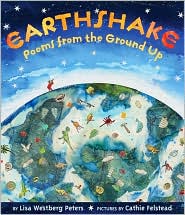
Westberd, Lisa. 2003. Earthshake: Poems from the Ground Up. Illus. by Cathie Felstead. NY: Greenwillow Books. ISBN: 0060292652.

Saturday, February 19, 2011

Edgar Springs, Missouri? - A Poetry Break

INTRODUCTION
Everyone needs to be exposed random facts everyone so often (or all the time!). The Edgar Spring, MO that is the subject of this poem is the "Center of the U.S. Population," and really is a little fact that isn't mentioned enough. This poem would be perfect for a geography lesson or a lesson on the U.S. Share this one with other poems found in the same book or from A World of Wonders: Geographic Travels in Verse and Rhyme, which is also by J. Patrick Lewis.

POEM
Edgar Springs, Missouri?
(Center of the US Population)
by J. Patrick Lewis

Smack-de-do-dab in the middle
Of America's a little
Hamlet by the name of Edgar Springs.

And I think I oughta mention
(Could I have y'all's attention?)
'Cause it may not have the most famous ring:

Hundred ninety (population)
Belly button of the nation,
One P.O.,
A general store,
A stop for gas.

It's a breadbox of a borough,
And the bloomin' Census Bureau
can't locate it with a magnifying glass!

EXTENSION
With this poem and any other geographical poem shared, have maps available and an images of the subject for the children to look at. Invite them to explore the maps to find a city or town they have never been to then have them research from the chosen to location. With the information in had have them share a poem (doesn't matter how long) about it.

BIBLIOGRAPHY
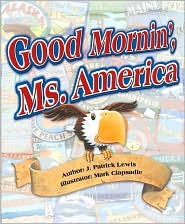
Lewis, J. Patrick. 2007. Good Mornin', Ms. America: The U.S. in Verse. Illus. by Mark Clapsadle. Columbus, OH: Gingham Dog Press. ISBN: 0769631703.

Friday, February 11, 2011

How to Make a Valentine - A Poetry Break

INTRODUCTION
It's that time of year again. Pull out that construction paper, those bottles of glue and glitter (or glitter glue pens, you're choice), white paper doilies, and the all the instruments needed to create those little cards to put in someone's decorated shoe box. Yes, it is Valentine's Day is just around the bend! This poem is for those who may be shy at heart or just plain do not want to give a valentine to anyone at school. Share this poem with other fun ones to get the full range for this little day.

POEM

How to Make a Valentine - by Bobby
by Jenny Whitehead

.....................Cut one red heart,
................. ...Sprinkle sprinkles,
...................Smooth out all of the
................ ..Glue-bump wrinkles.
.............. .....Stick some stickers,
........... ............. ...Scribble,
........... ............. .Swirl swirl.
.............. .... .Give to Grandma,
.............. .... .. .Not a GIRL girl.
................... .... . (No way!)

EXTENSION
Invite the kids to create their own poem about the process of creating their own valentine hearts or cards, and, if they are brave enough, to say who the cards are for. They could even create a secondary poem that could be the written sentiment for their recipients.

BIBLIOGRAPHY
Whitehead, Jenny. 2007. Holiday Stew: A Kids Portion of Holiday and Seasonal Poems. NY: Henry Holt and Company, LLC. ISBN: 9780805077155.

Thursday, January 6, 2011

Longing for Beauty - A Poetry Break

I got the book from which these poems came from for Christmas (which I was very excited about!), and there were so many good poems to pick from it was hard to choose one for a poetry break!

INTRODUCTION
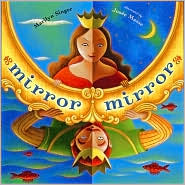
There are so many different styles of poems! Acrostic, haiku, concret, and more! Poet Marylin Singer has beautifully introduced the Reverse Poem in her new book Mirror, Mirror: A Book of Reversible Verse where she has taken the famous fairy tales and written two poems telling the story from two points of view. The "cool" affect of these poems is they are the exact same words, only one is in reverse. To introduce the a poem, ask the children if they are familiar with the fairy tale and briefly discuss reverse poems to them.

POEMS
Longing for Beauty
by Marilyn Singer

(poem 1)
A beast
can love
beauty.
A moist muzzle
can welcome
a rose.
A hairy ear
can prize
a nightingale, singing.
Beneath fur,
look!
A soft heart
stirs,
longing.

(poem 2)
Longing
stirs
a soft heart.
Look
beneath fur.
A nightingale singing,
can prize
a hairy ear.
A rose
can welcome
a moist muzzle.
Beauty
can love
a Beast

EXTENSION
After reading the poems as the children if they know which poem is about which character: Beauty or the Beast? (Note, if you show the book's illustrations this could help them decide as the artwork generally shows the characters standing on the left or right side of the page just like the poems are.) When the children know what reversible poems, they can create their own simple reversible poems about nature or a single object. If someone wants to be ambitious and try to write their own reversible poem stories based on a fairy tale or beyond let them try!

BIBLIOGRAPHY
Singer, Marylin. 2010. Mirror, Mirror: A Book of Reversible Verse. Illus. by Josée Masse. NY: Dutton Children's Books (imprint of Penguin Group Inc.). ISBN: 9780525479017.