Showing posts with label Historical. Show all posts

Thursday, December 13, 2012

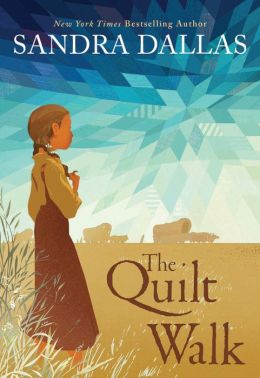
The Quilt Walk

BIBLIOGRAPHY
Dallas, Sandra. 2012. The Quilt Walk. Ann Arbor, MI: Sleeping Bear Press. ISBN: 9781585368006.

BOOK REVIEW
It was1863 when her Pa announced that the family were to pull up roots and head out west to Golden Calorado, and ten-year-old Emmy Blue had mixed feelings. Excitement and adventure waited out west, but she would have to leave her family, friends even her cat in her hometown of Quincy, Illinois. Despite the chance of never seeing their loved ones again the Hatchett family started out on the Overland Trail to start a new life where the Colorado Gold Rush is in full swing. In attempts to make her a proper young lady and seamstress despite being so far away, Emmy Blue's grandmore gives her a parcel of fabric pieces that would create a minature log cabin quilt that could be stitched during her journey. Though extremely reluctant at first Emmy Blue grows to secretly enjoy quilting to the point that she would walk along the family wagon with her Aunt Catherine and stitch. Told through a child's eyes the historical details are effortelss written into the story that range from how diverse groups of families scarifice many things like their possessions to make the arduous journey to these groups make friends, facing accidents and death, families turning back to return their original homes, and the fears of encountering the American Indians. The book also wonderfully illustrateds the time period's gender roles, especially for women who "have a duty to their husband[s]" but who are also strong, brave, and educted. The encompassing theme of quilting, and how a wuilt itself can tell a story, is something that is typically focused on in a book about America's westward expansion and is a welcomed sight. Based on true events of a pioneer family, Sandra Dallas' first children's book is a beautifully stitched together book that is perfect for library collections and book clubs.

CONNECTIONS
  • Ask the children how they would feel if their parents announced that they were leaving many things behind and moving to some place brand new.
  • Ask the children for their thoughts on the roles of the adults and children during the journey west.
    • Subsquently, ask them for thoughts on gender roles.
  • Share books that have colored images of quilts, especially ones that were made during the 19th century.
  • Share books about pioneers.
  • Have the children create their own quilting block, which can be done on paper and drawing or you can go the whole way and sew a block.


Saturday, June 9, 2012

Some Recommended Chapter Books for Girls

It's summer and it's time to share new reads with the kids who are off from school. The following list are books that I have recommended to young girl readers who are approximately 3 grade and up (and don't worry, a boy's is coming soon!). We have humor, mysteries, ghost stories, adventures, newer titles and classic titles! Hopefully there is at least one that peaks a reader's interest.

MORE RECENT TITLES
  • The True Confessions of Charlotte Doyle written by Avi
  • The Chasing Vermeer trilogy written by Blue Balliet 
  • The Penderwicks trilogy written by Jeanne Bridsall
  • Shakespeare's Secret written by Elise Broach
  • The Sisters Grimm series written by Michael Buckley and illus. by Peter Ferguson
  • Molly Moon series written by Georgia Byng
  • The Tale of Despereaux written by Kate DiCamillo and illus. by Timothy Basil Ering
  • Coraline written by Neal Gaiman
  • Running Out of Time written by Margaret Peterson Haddix
  • The Old Willis Place written by Mary Downing Hahn
  • Just Grace series written and illus. by Charise Maricle Harper 
  • The Tail of Emily Windsnap written by Liz Kessler
  • Katie Kazoo, Switcheroo series written by Nancy Krulik and illus. by John and Wendy 
  • Pippi Longstocking written Astrid Lindgren and illus. by Louis S. Glanzman
  • Nancy Drew and Clue Crew series written by Carolyn Keene and Macky Pamintuan 
  • The Hop written by Sharelle Byars Moranville and illus. by Niki Daly
  • Amelia's Notebook series written and illus. by Marissa Moss
  • Percy Jackson and the Olympians series written by Rick Riordan
  • Heroes of Olympus series written by Rick Riordan
  • The Kane Chronicles series written by Rick Riordan 
  • Harry Potter series written by J. K. Rowlings  
  • Dork Diaries series written and illus. by Rachel Renee Russell
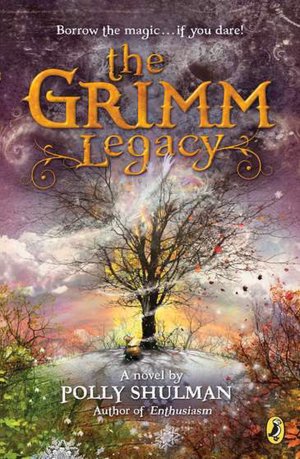
  • The Grimm Legacy written by Polly Shulman 
  • The Mysterious Benedict Society trilogy written by Trenton Lee Stewart 
  • The Books of Elsewhere series written by Jacqueline West 
  • The American Girl series by various authors and illus. by various artists 
  • Little House series (related to the original Little House on the Prairie series) written by various authors 
  • Dear America series written by various authors

CLASSIC TITLES 
  • Little Women written by Louisa May Alcott   
  • The Wizard of Oz series written by L. Frank Baum
  • A Little Princess written by Francis Hodgson Burnett
  • The Secret Garden written by Francis Hodgson Burnett
  • Matilda written by Roald Dahl and illus. by Quentin Blake
  • Trixie Belden series written by Julie Campbell
  • Romona series written by Beverly Clearly 
  • Because of Winn-Dixie written by Kate DiCamillo
  • Harriet the Spy written by Louise Fitzhugh
  • Nancy Drew series written by Carolyn Keene
  • From the Mixed-Up Files of Mrs. Basil E. Frankweiler written by E. L. Konigsburg   
  • Anne of Green Gables series written by L. M. Montgomery
  • The Borrowers series written by Mary Norton 
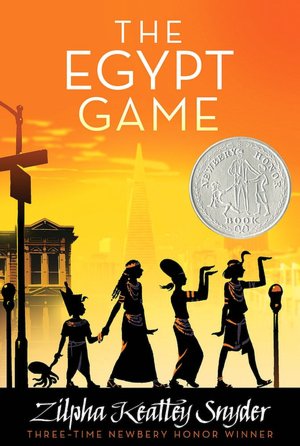
  • The Egypt Game written by Zilpha Keatley Snyder and illus. by Alton Raible
  • The Boxcar Children series written by Gertrude Chandler Warner 
  • Charlotte's Web written by E. B. White 
  • Little House on the Prairie series written by Laura Ingalls Wilder  
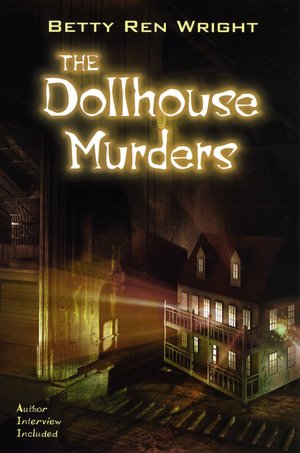
  • The Dollhouse Murders written by Betty Ren Wright 


Monday, January 30, 2012

Betsy Ross

BIBLIOGRAPHY
White, Becky. 2011. Betsy Ross. Illus Megan Lloyd. NY: Holiday House. ISBN: 9780823419081.

BOOK REVIEW
You open and read. Read, read. You grin. Grin, grin. Becky White's simple rhyming poem is an excellent book on a not-so-common story: the story of Betsy Ross sewing the first American flag. White captures the method of creating the flag with snip, snip and a rib, rib and straight to indigo dye drip, dripping. Those who are familiar with the American flag will soon enough know what Betsy is sewing toward the end of the book. Lloyd's quilted illustrations are wonderfully fitting. Using fabric and embroidery floss every image is handmade and matches the clean poem. End notes from the author and illustrator are found in the back with the instructions on how to cut a star from fabric the way Betsy Ross would have done. A title to include in any collection, but especially for a Fourth of July collection that needs a boost in great story books for young readers. All in all, a perfect book.

CONNECTIONS
  • Provide scraps of fabric and have the children try making their own Betsy Ross star.
  • For older children, have them sew their own flag out of scraps of fabric by hand.
  • For a poetry break, read this book!


Monday, July 12, 2010

Nonfiction: Hitler Youth: Growing Up in Hitler's Shadow

This is a reposting of the review for the book Hitler Youth: Growing Up in Hitler's Shadow, which was originally published October 26, 2007 for a course during my MLS degree. This is a great book and I hope that you find it informational!

BIBLIOGRAPHY

Bartoletti, Susan Campbell. (2005). HITLER YOUTH: GROWING UP IN HITLER’S SHADOW. NY: Scholastic Nonfiction/Scholastic, Inc. ISBN: 0439353793.

PLOT SUMMARY
Through the lives of twelve teenagers involved in the Hitler Youth, author Susan Bartoletti tells the powerful and detailed story of how Germany’s children were used to strengthen the Nazi Party and Adolf Hitler’s rise to power during the twelve years of the Third Reich.

CRITICAL ANALYSIS
In her Author’s Note at the end of the book author Susan Bartoletti tells the story of how an article stating that Adolf Hitler and the Nazi Party “‘rode to power on the shoulders of the politically active youth’” had fueled her strong and deep interest in the story of the children living in Germany during the Third Reich. For two years, she visited museums and libraries to pour over books, articles, diaries, and letters to learn more. She even visited Germany to see Berlin and other sites where the Hitler Youth did many of their activities. To finalize her research, Bartoletti interviewed many former members of the organization to hear their personal accounts. To gather further insight of this riveting history, she found stories of Jewish children and youth who lived during the Third Reich. Her goal, she states, is “an attempted to” gain an understanding and to “make sense of the fact that adults taught young people to hate, to kill, and to feel superior over others. After all, the Hitler Youth weren’t born Nazis; they became Nazis” (Bartoletti, p.161-62).

Hitler Youth: Growing Up in Hitler’s Shadow is an extremely well organized. After providing a table of contents, which list the chapter headings, Bartoletti introduced the twelve young people who are in the book by providing their photographs and a brief biographical tidbit that gave their birth year, where they were born and how they were involved in the Hitler Youth. The life of the organization from its beginning to its end is wonderfully illustrated and organized through the ten chapters, which hit on the major events during the twelve years of its existence, for examples the murder of Herbert Norkus, who became a Hitler Youth martyr, the change of the school system, the beginning of the Holocaust, which also includes the discrimination against Germany’s own mentally and physically “unfit” citizens (Bartoletti, p. 93), when Hitler made all remaining eligible children join the Hitler Youth under threat of hard labor at a concentration camp, and when the Allies invaded Germany in 1945.

The chapters also illustrate the progression of the twelve young people’s, as well as hundreds of other children, feeling towards the organization. For example, Helmuth Hubener, Karl-Heinz Schnibbe, and Rudolph (Rudi) Wobbe eagerly joined the Hitler Youth, as did all the children; however, they soon grew tired of the regime and began to listen to the illegal foreign radio stations and began to distribute anti-Nazi leaflets. Another resistance group called the White Rose was lead by another Hans Scholl when he became a medical student at the beginning of the war (Bartoletti, p. 118-19).

The text reads like a story; however it is full of information. To add personal anecdotes to the already gripping information, actual pieces of dialogue from the interviews and correspondence of former members of the organization are included to give the readers a clear insight into the thoughts and feelings of the children as well as their parents. A good example of this is when the Scholl children, Inge, Hans and Sophie, joined the Hitler Youth despite the disapproval of the father, Inge states that they “‘entered into the Hitler Youth with body and soul, […] and we could not understand why [their] father did not approve, why he was not happy and proud…. Sometimes he would compare Hitler with the Pied Piper of Hameline, with his flute, led the children to destruction’” (Bartoletti, p. 30). Despite all of the factual details, having been written in a story-like format with actual pieces of dialogue the book has a constant ease of crystal clear understanding and smooth flow from chapter to another.

Through out the entire book, with at least one on every page, Bartoletti provides black and white photographs depicting what life was like during Nazi Germany. There are pictures of children in uniforms performing all sorts of duties and activities, there are pictures showing the destruction that the Third Reich had caused, as well as members at the time of being captured by American soldiers and pictures of the children performing their punishment labor. The use of these photographs provides the visuals to the at time chilling text, and allows the readers to see the faces and environment that the members live in, letting them know that the Hitler Youth was only made of up children.

The final element to the story of the twelve young people who are in the book is the Epilogue. This rare glimpse into the lives of these people allows the readers to learn what happened to the young people who survived the war and provides their thoughts and feelings of their actions while being members of the Hitler Youth.

There are several of ways to access the information found in this amazing book. The chapter headings and the table of contents is one way for readers to find a specific time or event that is discussed. In the back of the book there is an Index, which provides the page of numbers of various topics within the book. Bartoletti also provides an index of where her quotes came from, a time of the Hitler Youth, and finally a note about the photographs used, explaining that the photographs in the book is only a “sampling of the millions taken during the Third Reich,” and recommends the readers who would like to view more photographs to visit the online collections at the Library Congress and at the United States Holocaust Memorial Museum (p. 163).

With all these amazing educational details and personal anecdotes of the lives of the children during the power of the Third Reich Bartoletti’s Hitler Youth: Growing Up in Hitler’s Shadow is a powerful and captivating book that allows readers of to truly learn about the Hitler Youth through the eyes of its members that were the exact same age. This book will provoke critical thinking and powerful discussions.

BOOK REVIEWS
PUBLISHER WEEKY
Bartoletti (Kids on Strike!) offers a unique and riveting perspective on WWII by focusing on the young people who followed Hitler from 1933-1945. The narrative primarily focuses on members of the Hitler Youth, but also profiles some of the group's dissidents and its Jewish targets. Hitler began his quest for dominance with young people, recognizing them as "a powerful political force" and claiming, "With them I can make a new world." Bartoletti describes how the propaganda of the Hitler Youth attracted children: "The overnight camping trips, campfires, and parades sounded like a great deal of fun," said one 12-year-old. But the organization also emphasized loyalty to the Third Reich above all (including family-one eight-year-old, Elisabeth Vetter, turned in her parents to the Nazis). The author personalizes the war by placing identifiable individuals at the center of the events, such as Sophie Scholl, who moved away from Nazi ideas as a teen and in college joined the "White Rose" group that published pamphlets detailing Nazi evils and urging resistance-a crime for which she and others were executed. Powerful black-and-white photographs testify to the lure and also the cruelty of the Nazis. Bartoletti's portrait of individuals within the Hitler Youth who failed to realize that they served "a mass murderer" is convincing, and while it does not excuse the atrocities, it certainly will allow readers to comprehend the circumstances that led to the formation of Hitler's youngest zealots. Ages 7-10. (Apr.) Copyright 2005 Reed Business Information. (May 23, 2005)

SCHOOL LIBRARY JOURNAL
Gr 5-8-Hitler's plans for the future of Germany relied significantly on its young people, and this excellent history shows how he attempted to carry out his mission with the establishment of the Hitler Youth, or Hitlerjugend, in 1926. With a focus on the years between 1933 and the end of the war in 1945, Bartoletti explains the roles that millions of boys and girls unwittingly played in the horrors of the Third Reich. The book is structured around 12 young individuals and their experiences, which clearly demonstrate how they were victims of leaders who took advantage of their innocence and enthusiasm for evil means. Their stories evolve from patriotic devotion to Hitler and zeal to join, to doubt, confusion, and disillusion. (An epilogue adds a powerful what-became-of-them relevance.) The large period photographs are a primary component and they include Nazi propaganda showing happy and healthy teens as well as the reality of concentration camps and young people with large guns. The final chapter superbly summarizes the weighty significance of this part of the 20th century and challenges young readers to prevent history from repeating itself. Bartoletti lets many of the subjects' words, emotions, and deeds speak for themselves, bringing them together clearly to tell this story unlike anyone else has.-Andrew Medlar, Chicago Public Library, IL Copyright 2005 Reed Business Information. (June 1, 2005)

CONNECTIONS
*Read more books like The Way People Live: Life in the Hitler Youth by Jennifer Keeley to learn more about the Hitler Youth
* Learn about the lives of children during the Second World War with books like Remember World War II: Kids Who Survived Tell Their Stories by Dorinda Makanaonalani Nicholson.
*For those who are interest, learn about the Holocaust with books like A history of the Holocaust by Yehuda Bauer and Nili Keren, and Ten Thousand Children: True Stories Told by Children Who Escaped the Holocaust on the Kindertransport by Anne Fox and Eva Abraham-Podietz
*Open up an opportunity for the young people to have a discussion where they can share their thoughts and opinions on the subject.

Thursday, July 1, 2010

Beat the Heat with Some Cool Summer Reads!

We're all about to be right smack in the middle of Summer. Especially for those in Texas! Beat the heat with some awesome books. These are some of my favorite books and some new ones that I have passed my desk and peaked my interest. Check them out at your local library! And don't miss out on the Summer Reading Program!

Easy Picture Books
  • Dinosaur Starts School by Pamela Duncan Edwards
  • Bark, George by Jules Feiffer
  • Possum Magic by Mem Fox
  • My Garden by Kevin Henkes
  • If You Give a Pig a Pancake by Laura Numeroff
  • The Dot by Peter Reynolds
  • Ish by Peter Reynolds
  • A Chair for Mother by Vera B. Williams
  • Pigeon Wants a Puppy by Mo Willems
WP-CC's All-Time Most Favorite Author: Mary Downing Hahn
From the moment I read The Doll in the Garden I was hooked to her novels. Her books are perfect for any season, but her ghost stories are the best during summer. They are scary, but not too scary - a perfect mixture. The Doll in the Garden still gives me chills and I really love time For Andrew. Explore her awesome books that I've listed below by genre:

Ghost Stories
  • All the Lovely Bad Ones: A Ghost Story
  • Deep and Dark and Dangerous: A Ghost Story
  • The Doll in the Garden: A Ghost Story
  • The Old Willis Place: A Ghost Story
  • Time for Andrew: A Ghost Story
  • Wait Till Helen Comes: A Ghost Story
Historical Fiction
  • Anna All Year Round
  • Anna on the Farm
  • As Ever, Gordy (sequel to Following My Own Footsteps)
  • Following My Own Footsteps (sequel to Stepping on Cracks)
  • The Gentleman Outlaw and Me - Eli
  • Hear the Wind Blow
  • Promise to the Dead
  • Stepping on Cracks
Mysteries
  • Closed for the Season: A Mystery Story
  • The Dead Man in Indian Creek
  • Following the Mystery Man
Contemporary Realistic Fiction
  • Daphne's Book
  • December Stillness
  • Janey and the Famous Author
  • The Jellyfish Season
  • The Sara Summer
  • The Spanish-Kidnapping Disaster
  • Tallahassee Higgins
  • The Wind Blows Backwards
Fantasy
  • Look for Me by Moonlight
  • The Time of the Witch
  • Witch Catcher
JF and YA Books for All!!!

Great Mysteries to Solve
  • Who Stole the Wizard of Oz by Avi
  • A great trilogy by Blue Balliett
  • Chasing Vermeer
  • The Wright Three
  • The Calder Game
  • From the Mixed-Up Files of Mrs. Basil E. Frankweiler by E.L. Kongsburg
  • The Egypt Game by Zilpha Keatly Snyder
Need a Little Action with Your Greek Mythology?
  • Percy Jackson and the Olympians series by Rick Riordan
  • The Lightning Thief
  • The Sea of Monsters
  • The Titan's Curse
  • The Battle of the Labyrinth
  • The Last Olympian
  • The Demigod File
Ooh, Vampires! (beyond Twilight!)
  • Look for Me By Moonlight by Mary Downing Hahn
  • The Silver Kiss by Annette Curtis Klause
  • Companions of the Night by Vivian Vande Velde
  • The House of Night series by P.C. and Kristin Cast:
  • Marked
  • Betrayed
  • Chosen
  • Untamed
  • Hunted
  • Tempted
  • Burned
  • Get ready for the next book Awakened coming January 2011!!!
  • Also get ready for the House of Night Fledgling Handbook 101 that's being released October 26, 2010!!!!!
"Swish and Flick!" - What is summer would it be without some Harry Potter?
by J.K. Rowling
  • Harry Potter and the Sorcerer's Stone
  • Harry Potter and the Chamber of Secrets
  • Harry Potter and Prisoner of Azkaban
  • Harry Potter and the Goblet of Fire
  • Harry Potter and the Order of Phoenix
  • Harry Potter and the Half-Blood Prince
  • Harry Potter and the Deathly Hallows
Great Guy Read
  • The Gardener by S.A. Bodeen
  • The Sherlock Holmes mysteries by Sir Arthur Conan Doyle
  • The Study in Scarlet
  • The Sign of Four
  • The Adventures of Sherlock Holmes
  • The Memoirs of Sherlock Holmes
  • The Hounds of Baskervilles
  • The Valley of Fear
  • His Last Bow
  • The Case-Book of Sherlock Holmes
  • The Graveyard Book by Neil Gaiman
  • the Last Thing I Remember by Andrew Klavan
  • The Long Way Home by Andrew Klavan (sequel to The Last Thing I Remember)
  • Percy Jackson and the Olympians series by Rick Riordan
Girls Have Adventures and Misadventures Too!
  • The True Confessions of Charlotte Doyle by Avi
  • Hunger Games by Susanne Collins
  • Catching Fire by Susanne Collins (sequel to Hunger Games) (get ready for the next book Mockingjay coming August 2010!!!)
  • The Gentleman Outlaw and Me - Eli by Mary Downing Hahn
Can't Mess with the Classics!!!
  • The Wonderful Wizard of Oz by L. Frank Baum (and the remaining original Oz books)
  • Alice in Wonderland by Lewis Carroll
  • Through the Looking Glass by Lewis Carroll
  • The Sherlock Holmes mysteries by Sir Arthur Conan Doyle
  • Beowulf translation by Seamus Heaney (Heaney's translation is the best out there, plus you can see the Old English text along with the English translation!)
  • The Nancy Drew mysteries by Caroline Keene
  • The Hardy Boys mysteries by Franklin B. Dixon
  • The Chronicles of Narnia series by C. S. Lewis
  • The Lion, Witch, and the Wardrobe,
  • Prince Caspian: The Return to Narnia
  • The Voyage of the Dawn Treader (get ready for the new movie coming December 2010!!!)
  • The Silver Chair
  • The Horse and His Boy
  • The Magician's Nephew
  • The Last Battle
  • Kidnapped by Robert Louis Stevenson
  • Treasure Island by Robert Louis Stevenson
  • The Adventures of Tom Sawyer by Mark Twain
  • The Adventures of Huckleberry Finn by Mark Twain
What would Summer be
Without a little
Poetry?

  • Shout! Little Poems that Roar by Brod Bagert
  • Give Yourself to the Rain: Poems for the Very Young by Margaret Wise Brown
  • Don't Step on the Sky: A Handful of Haiku by Miriam Chaikin
  • Fold Me a Poem by Kristine O'Connell George
  • Toasting Marshmallows: Camping Poems by Kristine O'Connell George
  • Honey, I Love and Other Love Poems by Eloise Greenfield
  • Behind the Museum Door: Poems to Celebrate the Wonders of Museums by Lee Bennett Hopkins
  • Pocket Poems by Bobbie Katz
  • I Once Ate a Pie by Patricia and Emily MacLachlan

Friday, March 27, 2009

Poetry Across The Curriculum: Kate Shelley - A Poetry Break

INTRODUCTION
This biographical poem tells the story of a young girl’s bravery to go out in a storm to save the men from a train crash during the late 19th century. Perfect for social studies lessons, pair this poem with picture books like Kate Shelley: Bound for Legend written by Robert D. San Souci and illus. by Max Ginsburg and Kate Shelley and the Midnight Express written by Margaret K. Wetterer and illus. by Karen Ritz.


POEM

Kate Shelley
By Ann Whitford Paul

Lightning ripped apart the sky. Thunder pounded loud,
hammering relentlessly. Rain pelted from the clouds.
Kate Shelley trembled – mother, too – at the raging storm.
They moved in closer to their hearth,
Dry and safe and warm.
Then on the tracks nearby their home,
Men rode a service rain to check the rails
for damage caused by so much pouring rain.
Kate heard its bell toll once, twice, and then a roar of sound,
as if the thunder rumbled in the belly of the ground.
Kate heard its bell toll once, twice, and then a roar of sound,
Kate grabbed her lantern.
Mother begged her, “Stay!” but Kate dashed out.
The bridge was smashed! The train had crashed!
Two men clung desperately to trees.
Kate started into town for help.
The path was overgrown – she tripped and tumbled down.
Kate stood again and ran
until she reached Des Moines’ wide river.
The water lapped the railroad bridge.
Her lantern’s small flame quivered. Then it died!
Kate strained to see the ties place far apart,
stooped down to her knees, and groped on through the dark.
Jabbed by splinters, ripped by nails,
she crawled along the planks – across a span, five hundred feet.
At least she reached the bank.
Cold and wet seeped to her bones,
yet still she ran – raced fast! – to town.
The people there were horrified.
They grasped and hurried with her to the train.
Though nearly drained of hope,
the men were pulled to safety with a long and looping rope.
Kate Shelley didn’t wait for thanks,
But trudge on through the storm,
back to Mother, back to home,
dry and safe and warm

EXTENSION
Invite the children to share what they would have done if they saw that the bridge was out and the trained had crashed. After sharing the poem and other picture books, ask the children to compare the different versions of Kate Shelley’s story. Which one did they like best? Also continue the sharing of stories of heroic people in history, including girls found in All by Herself by Ann Whitford Paul.

BIBLIOGRAPHY
This poem is from:

Paul, Ann Whitford. 1999. All by Herself: 14 Girls Who Made A Difference. Illus. by Michael Steirnagle. NY: Harcourt, Inc. ISBN: 0152014772.

Friday, November 14, 2008

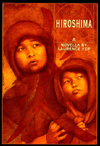
Asian Pacific American Lit.: Hiroshima

BIBLIOGRAPHY
Yep, Laurance. 1995. Hiroshima: A Novella. NY: Scholastic, Inc. ISBN: 0590208322.

PLOT SUMMARY
Through a combination of facts and composite characters, Yep presents the descriptive story of the Hiroshima atomic bombing during World War II from the point of view of the Japanese culture.

ANALYSIS
In Hiroshima: A Novella, Laurence Yep presents a powerful telling of the atomic bombing of the Japanese city during World War II. The story’s text is written in short, crisp sections from the point of view of a Japanese girl named Sachi as well as of Colonel Tibbets the pilot of the U.S. bomber Enola Gay that carried the bomb. The narrative is also full of actual facts of the atomic bomb (e.g. how it works), what life was like in Hiroshima prior to the bombing, and what happened afterwards (from the day of the bombing to years later). There are certain parts of the books that have great power in the details that are provided, for example:

“The bomb goes off 580 meters above the ground. The temperature reaches several million degrees Celsius immediately. It is so hot that the hospital below and everyone inside it disappears.

“Two hundred yards away, people vanish. However, in that instant, their outlines are burnt into the cement like shadows” (p. 22-23).

“People jump into it [a river] to get away from the fire. In the panic, some people are crushed. Others drown. Sachi cannot swim. She jumps in anyway… Soon the river is full of bodies" (p. 26-27).

And,

“Flowers bloom again. Some are beautiful as ever. However, the radiation makes other flowers grow in strange, weird shapes” (p. 31).

Though, with the combination of how the narrative is divided into brief sections and the how many facts the text does not flow at times and read more like a beginning draft of a novel. However, it is because of this short of writing, there is starkness to the story that creates more resonance in the meaning that Yep intended to have. Plus, by having a character such as Sachi, there is another personal level for the readers to connect with within the context of the story.

Because this the story is set in the perspective of the Japanese people, there is a wonderful amount of cultural markers. Sachi and her older sister Riko visit the shrine to say a prayer for their father who is away with the army. When the air-raid sirens sound, the sisters put on their air-raid hoods that is to protect them from burning sparks from fires set by bombs. The sisters and other children their age are also take part in helping defending Japan from the Americans. Sachi is part of the labor service corps that demolishes houses so that any fires would not spread. Riko records phone messages at the army headquarters, which use to be done the soldiers who are now fighting the Americans.

Other cultural markers include the description of many of the wood and paper houses, the description of what the city after is grew back and the description of the twenty-five Hiroshima Maidens who were brought to the U.S. for surgeries to fix their burns and scares that they received from the bombings. There is also a description of a cultural legend when Yep relates the story of a young girl named Sadako, who was sick and died of the radiation ten years after the bombing, learned of the legend that “if she folded one thousand paper cranes, she would get her wish” (p. 46). However, she died despite folding one thousand paper cranes, and now there is a Paper Crane Club that folds paper cranes to honor and remember her and other victims from the bombing.

At the end of the story, Yep provides an Afterwards that explains that the character Sachi is a composite of many children that had survived the bombing and explained how difficult it was to apply the facts due to the fact that many sources may have different information. Finally, at the end Yep also provides the bibliography of the sources that he used for the book.

Because the story is set from within the city of Hiroshima and the Japanese people, Hiroshima: A Novella as a powerful story that can open the eyes of the readers as it is a story that they would be familiar with though through the U.S. perspective. This would a good book to include in a discussion or lesson on World War II and Japan.

BOOK REVIEWS
BOOKLIST
*STARRED REVIEW* Gr. 4-7. In quiet, simple prose, Yep tells what happens when the atomic bomb is dropped on Hiroshima in 1945. He tells it in short chapters in the present tense, switching from crewmen on the Enola Gay to children in a Hiroshima classroom; then he describes the attack, the mushroom cloud, and the destruction of the city; finally, he talks about the aftermath, immediate and long term, including the arms race and the movement for peace. One chapter explains the physics of the explosion and of radiation. The facts are so dramatic and told with such controlled intensity that we barely need the spare fictionalization about a young Hiroshima child who is there when the bomb falls and who later comes to the U.S. for treatment (Yep says in an afterword that she's a composite of several children). The account is fair, nonhectoring, and totally devastating. Though accessible to middle-grade readers, this will also interest older readers, who will find nothing condescending in content or format. Fifty years later, the event is still the focus of furious controversy (even the numbers are in dispute), and this novella will start classroom discussion across the curriculum. There's a bibliography for further reading. ((Reviewed Mar. 15, 1995)) -- Hazel Rochman. Booklist, published by the American Library Association.

SCHOOL LIBRARY JOURNAL
Gr 4-6?Through a stacatto, present-tense narration that moves back and forth between the experiences of a 12-year-old girl and the men on the Enola Gay, Yep's novella tells the events of the day the first atomic bomb was dropped and its aftermath. Sachi survives but is badly burned; her sister dies and her soldier father is killed in action. For three years the girl spends most of her time indoors, as newcomers to the city fear the scarred survivors. Then she travels to America for plastic surgery, which enables her to take part in her society again. She returns to Japan, hoping to help other victims. Yep ends with two chapters on the destructive potential of nuclear warfare and on some of the efforts being made toward disarmament. His words are powerful and compelling, and the facts he presents make readers realize the horrors of that day and its impact beyond. As a fictional character, Sachi never becomes much more than a name, but even so, readers will be moved by her tale. Hiroshima has a more adult format than Junko Morimoto's more personal My Hiroshima (Viking, 1990) or Toshi Maruki's Hiroshima No Pika (Lothrop, 1982), both of which tell the story in pictures as well as in words.?Louise L. Sherman, Anna C. Scott School, Leonia, NJ

CONNECTIONS
*Read books about one the known victims of the bombing, Sadako: Sadako and the Thousand Paper Cranes by Eleanor Coerr and illus. by Ronald Himler.
*Read other books by Laurence Yep: The Ghost Fox, Dragon’s Gate and Dragonwings.


Friday, October 3, 2008

African American: Miss Crandall's School for Young Ladies and Little Misses of Color

BIBLIOGRAPHY
Alexander, Elizabeth and Marilyn Nelson. 2007. Miss Crandall’s School for Young Ladies and Little Misses of Color. Illus. by Floyd Cooper. Honesdale, PA: Wordsong. ISBN: 1590784561.

PLOT SUMMARY
Through a collection of poems, authors Elizabeth Alexander and Marilyn Nelson tell the true story of teacher Prudence Crandall who opened her school to African American girls in 1833 Canterbury, Connecticut and of their perseverance through the actions of the townspeople who are racially opposed to Crandall’s decision to teach young misses of color.

CRITICAL ANALYSIS
Miss Crandall’s School for Young Ladies and Little Misses of Color is a beautiful book of poems that relays the story of a teacher and her African American students’ during the 1830’s. Award-winning poets Elizabeth Alexander and Marilyn Nelson’s collaboration presents twenty-four poems, separated into six parts, provides vignettes to the story. The poems are written in the sonnet form. Each have fourteen lines and either follows the traditional rhyming scheme or follows the innovative free verse style. Several are creatively separated into multiple stanzas to make the specific sonnet affective in telling and can become an overall intriguing poem for the readers to read and reflect upon.

Each poem has a different voice and portrays different thoughts and feelings that tells the story from its beginning with students leaving their home to attend the school to learn, to the education, to when Miss Crandall and her students hearing and experiencing the heated opinion of the townspeople, to when Miss Crandall has nothing left but to close the school. Despite being in poetic form, the text remarkably is rich and understandable to the readers. This is particularly seen in the sonnet “Fire from the Gods:”

I didn’t know how much I didn’t know.
Like Brer Mosquito on Brer Elephant,
now I know my capacity for awe
is infinite: this thirst is permanent,
the well bottomless, my good fortune vast.
An uneducated mind is a clenched fist
that can open, like a bud, into a flower
whose being reaches, every waking hour,
and who sleeps a fragrant dream of gratitude.
Now it’s “illegal,” “illegitimate”
to teach brown girls who aren’t state residents.
As if Teacher’s stealing fire from the gods.
As if the Ancestors aren’t tickled to death to see
a child they lived toward find her minds infinity (p. 19).
and in “End”:
Upturned stacks of Webster’s blue-backed spellers.
broken slates. Liberators burned to ash.
Ninety panes of first-floor windows smashed,
frame wood splinters and jagged as tinder.

I can no longer protect my students.
Strangely, it is not God’s words that ring
in my head as I search for understanding,
rather, words that I saw on a charred reader:

I must remind you that the earth is round.
Men and animals live on the surface.
There is no comfort in these words,
yet the fact of them comforts me: schoolbooks.

I am a teacher of colored misses,
But I can no longer protect my students (p.44).

Within each poem, to create the authors added to the different voices that they created is have different tones and how they address people. The schoolgirls call Miss Crandall “Teacher,” “Miss Teacher,” “Teacher Pru,” and “Miss Crandall” The poem “Miss Ann Eliza Hammond” wonderfully illustrates a student’s opinion and speech:

I brought here, in a bag between my breasts,
money from Mama’s friends who had bought herself,
then saved enough, by working without rest,
to free four friends. This woman gave me her wealth
of carefully folded dollars to I could take
Miss Crandall’s course of study. And within a week
of my arrival, I was summoned to appear in court.
The judge ruled I’d have to pay a fine, depart,
or be whipped naked.

Honey, the first white fool
that thinks he gone whip me better think again.
Touch me, and you’ll draw back a nub, white man.
I ain’t payin’, and I’m stayin’. People’s dream brought me to this school.
I’m their future, in a magic looking glass.
That judge and the councilmen can kiss my rusty black (p. 26).

Floyd Cooper’s illustrations are a pure compliment to the poems. Through an innovative subtractive multi-medium technique, the artwork is colorful with a color scheme of neutral tans and accents of pinks, greens, purple, and blue and provides a softness that adds to the overall presence that is given with the book. In particular are the depictions of the students. Not one looks a like and have varying sizes of noses, lips, skin color and hairstyles. In particular the portraits for the poems “Miss Ann Elizabeth Hammond” and “Arson at Midnight” are beautifully executed. To keep the book appearance light and airy the illustrations are kept to one or two per two-page spread and only occupy a corner or side. There are double-page spread illustrations at the beginning of each of the six sections that depict the schoolhouse and the students. Though the clothing is more representative of what was worn during and after the Civil War, the illustrations are wonderfully done and are perfect for the book.

To complete the book there is an introduction that provides the details and historical facts to put the poems into context. Finally, there is a note from the authors that present information on the creative process of their collaboration and how their poems only present a certain parts of the entire story that allow the readers to think, imagine, and explore the meanings of the poems with the historical story.

Though their story is relatively unknown, through the collaborative work of Alexander and Nelson, Prudence Crandall and her schoolgirl are now part of the treasured books that tell the powerful stories of this part of America’s history. This book is perfect for all school and public libraries.

REVIEWS
BOOKLIST
Twenty-four clear, beautiful poems in different voices tell the stirring history of white teacher Prudence Crandall, who defied bigotry in Canterbury, Connecticut, in 1833 by setting up a school for 20 young African American women, many of them freed slaves, who dared to attend. Alexander and Nelson, both Connecticut poets, use dramatic sonnets to tell how Crandall and her students braved resistance to “teach and learn.” The pupils speak directly of the anguish of family parting (illiteracy “means silence when you leave home”); the wonder of learning (“I didn’t know how much I didn’t know”); the racism, including the “etymology” of invective (“no one in town will sell us anything”); and the horrifying climax of “Arson at Midnight,” when 300 men attacked the school and closed it down. A long introduction details the historical facts, and in a final note the poets (Nelson is Connecticut’s poet laureate) talk about how each has used the sonnet form. The images in their poems and in Cooper’s quiet, dramatic pastel illustrations compellingly capture the haunting history. Pair this picture book for older readers with Suzanne Jurmain’s The Forbidden Schoolhouse (2005) and books about the KKK -- Hazel Rochman. Booklist, published by the American Library Association.

KIRKUS REVIEWS
Two years after Suzanne Jurmain's nonfiction chronicle, Forbidden Schoolhouse (2005), comes a glorious poetic celebration of the teacher and students at a Connecticut school that defied mid-19th-century convention to educate African-American girls. Divided into six sections, four sonnets in each, the voices of the 24 girls tell, one by one, the tale, from hope and excitement at the beginning of the enterprise to fear and defiance as forces both institutional and vigilante conspire to destroy Miss Crandall's School. Nelson's sonnets adhere to a strict form while Alexander's explore the boundaries of the form; each distills the powerful emotions inspired by the story. For example, "Fire from the Gods": "I didn't know how much I didn't know, / Like Brer Mosquito on Brer Elephant, / now I know my capacity for awe / is infinite. . . . " Cooper's soft pastel illustrations provide a muted counterpoint to the text, mixing depictions of school and students with images of the natural world in a lovely rhythm. A foreword provides a brief prose history of the school; a concluding authors' note explains their collaborative process. (Poetry. 10+)

CONNECTIONS
*Learn more about Miss Crandall, her school and her students with the book: The Forbidden School House: The True and Dramatic Story of Prudence Crandall and Her Students by Suzanne Jurmain
*Have the students explore the resources available on the Prudence Crandall Museum’s website: http://ct.gov/cct/cwp/view.asp?a=2127&q=302260

Wednesday, October 1, 2008

African American: Black Cowboy, Wild Horses: A True Story

BIBLIOGRAPHY
Lester, Julius. 1998. Black Cowboy, Wild Horses: A True Story. Illus. by Jerry Pinkney. NY: Dial Books. ISBN: 0803717873.

PLOT SUMMARY
Bob Lemmons, a former slave now cowboy on a ranch, has the special ability to track animals. He will follow the animals. On the hunt for wild horses, Bob and his black stallion Warrior follow the horse tracks for days until he is finally accepted as one of their own and is able to become leader of the herd and brings them back to the corrals at the ranch.

CRITICAL ANALYSIS
Through the well crafted Black Cowboy, Wild Horse: A True Story author Julius Lester and illustrator Jerry Pinkney have introduced young readers to one of the Old West’s legendary cowboy Bob Lemmons and his ability to become a horse in order to corral the wild horses on the western plains. Lester’s text is poetically rich and full of metaphors that describe the scenery of the open plains that Lemmons travels through as he follows the mustangs, “The sky was curved as if it were a lap on which the earth lay napping like a curled cat” (p. 2) as well as the cool patience that Lemmons exude as he calmly follows the horses. The narrative is also full of action, which is especially seen when Lemmons and his horse Warrior fight the stallion leader of the wild horses. Not only does Lester tell the story in action but also the personal descriptions of both the human and animal characters in the story.

Pinkney’s illustrations both compliments and visually continues telling the story of Bob Lemmons. In double-page spreads the illustrations fills the book with wonderfully detailed watercolors. The depictions of the horses and the plains are beautifully accurate. In particular the part when Lemmons has become the leader of the herd and is now the “sky and plains and grass and river and horse” and the illustrations shows the wild horses following the cowboy across the plains and in the sky are billowing clouds that have the faint images of wild horses. Pickney’s artwork also presents the readers with various points of views in order to truly show the beauty of the horses in movement and the land that Lemmons roamed.

Though this book is about an African American cowboy that is known in America’s Wild West history, there is a very limited number of cultural markers present in the entire book. The only mention of the African American culture is when the narrative explains that “Bob had been a slave and never learned to read words” (p.5). The illustrations are the only other cultural marker that presents a depiction of Lemmons with chocolate brown skin and short curly hair. Though this could be considered a weakness in the book one must take into consideration that story is not about Lemmons himself but how he became one of the wild horses in order to bring them back to the ranch were he worked.

With the combination of Lester’s detailed and poetic narrative and Pinkey’s beautifully detailed and executed illustrations readers are able to catch a glimpse into the life of a legendary cowboy from America’s history.

REVIEWS
BOOKLIST
Ages 5^-9. One of every three cowboys who helped tame the Wild West was either Mexican or black. This is the true story of one of the latter, Bob Lemmons. In language rich with simile and metaphor, Lester's account focuses on the former slave's uncanny tracking abilities as he trails a herd of mustangs as well as his mission to tame the wild horses and lead them back to the corral. Pinkney's earth-colored gouache and watercolor paintings add the look of the Texas plains to Lester's account and capture the energy of the horses as they gallop across sweeping, double-page spreads. Lester and Pinkney's manifest love and respect for the West and cowboys of color, whose contributions have been too long overlooked, distinguish their latest collaboration. Michael Cart

SCHOOL LIBRARY JOURNAL
Grade 2-4APinkney and Lester add a picture-book chapter to the lore of this nation's "true West" with the retelling of a story of a wild horse hunt by the black cowboy Bob Lemmons. He and his stallion, Warrior, wander on the prairie until they find the tracks of the animals they seek. Bob then spends days in a very slow approach to the herd. Horse and rider finally join the herd and are accepted by the wild horses, until at last Bob challenges the lead stallion for control. On Warrior's back, he fights the stallion, defeats him, and then leads the animals into captivity in the ranch corral. Throughout, both text and pictures emphasize the blending of all life. The linkages between the cowboy, the animals, and the natural world are so strong that lines separating them are blurred. Lester and Pinkney's stated aims were to recast their childhood love of cowboys and the Old West with more recent historical research into the contributions of men of color, both black and Hispanic. They have done that, and achieved something else as well: youngsters will reflect on the relationships between humans and other animals. Pinkney's pictures were never better, making it all the more unfortunate that text boxes cover some of the action. Lester's overuse of metaphor is also a drawback. Still, this book will inspire heavy-duty thinking on the part of young readers.ARuth Semrau, formerly at Lovejoy School, Allen, TX Copyright 1998

CONNECTIONS *Read more about African American cowboys with books like Bill Picket: Rodeo-Ridin’ Cowboy by Andrea Davis Pinkney and illus. by Brian Pinkey.
*Read more books by Julius Lester: John Henry (illus. by Jerry Pinkney) and Sam and the Tigers: A Retelling of ‘Little Black Sambo (illus. by Jerry Pinkney).
*Read more books illustrated by Jerry Pinkney: The Patchwork Quilt (written by Valerie Flournoy) and The Talking Eggs (written by Robert D. San Souci)

Saturday, May 3, 2008

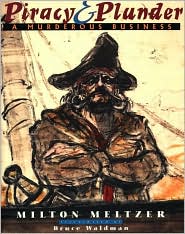
Informational Books: Piracy & Plunder: A Murderous Business

BIBLIOGRAPHY
Meltzer, Milton. 2001. Piracy & Plunder: A Murderous Business. Illus. by Bruce Waldman. NY: Dutton Children’s Books. ISBN: 0525458573.

BOOK REVIEW
In his book Piracy & Plunder: A Murderous Business, Meltzer breaks the spell of the romanticism that has been associated with pirates and their way of life that has been set by pop culture. In brief chapters the book explores the details of the harsh and cruel life of piracy, which includes its history (beginning with the ancient Greeks and goes to the Vikings, 18th century, and up to the modern day), the reason behind why men and even women came to the ruthless profession, to life aboard ships, the Code of Conduct, marooning, and discusses the many of the famous pirates like Blackbeard, Captain Kidd, and Sir Henry Morgan, to the truth of buried treasure, forms of torture, and the connections that pirates had with slavery. Waldman’s tan, black and red and somber friend-hand artwork provides the extra visual to the already attention grabbing text, and the geographical maps that are scattered through the text adds to the context of describing the locations of the infamous pirates and their ports of call. At the end there is a selected bibliography for future reads and a detailed index. An excellent book for those fascinated by the pirates, who are doing report and for the history lovers.

Saturday, April 5, 2008

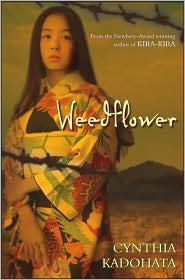
Historical Fiction: Weedflower

BIBLIOGRAPHY
Kadohata, Cynthia. 2006. Weedflower. NY: Atheneum Books for Young Readers. ISBN: 0689865740.

BOOK REVIEW
Japanese-American Sumiko (Weedflower) live with her extended family in southern California and works on her aunt and uncle’s flower farm. Being in the only Asian in her sixth-grade Sumiko was the subject of prejudices but found comfort in being with her family. However, the day after she was turned away at the door to a classmate’s birthday party that she was invited to, her world changes when Japan attacks Pearl Harbor and America declares war. Now she, her family and all other Japanese (including American-born) are viewed by all with suspicion, and they soon find themselves being shipped to an the Colorado River Relocation interment camp in Poston, Arizona. Struggling with the isolation, fear, confusion and the boredom, Sumiko begins to find comfort in creating a small flower garden and a budding friendship of Frank, a Mohave Indian whose reservation is being used for the camp. Drawing these amazing details from personal interviews with survivors and the extensive research, Kadohata has created an amazingly compelling narrative about America’s World War II history and one girl’s coming-of-age as she searches for cultural acceptance. An excellent and resonating source for readers to learn about America’s World War II history and civil rights of Japanese-Americans.

CONNECTIONS
*Read Kadohata’s book Kira-Kira.

Historical Fiction: Nory Ryan's Song

BIBLIOGRAPHY
Giff, Patricia Reilly. 2000. Nory Ryan’s Song. NY: Delacorte Press. ISBN: 0385321414.

BOOK REVIEW
Twelve-year-old Nory Ryan lives with her granda, two sisters, and little brother on the west coast of Ireland in 1848. With the harsh treatment of their English landlord many, including Nory’s eldest sister and husband, begin to leave for America where no one is hungry and were they are free from the English. While her da (father) is away at sea earning money for food and rent, the potato blithe from the north creeps into the Nory’s family and neighbor’s fields and poisons the crops. As she watches her family and neighbors continuously affected by the diseased potatoes that were once the staple in their livelihood, Nory refuses to give into the hunger and despair. Using her resourcefulness she courageously scales down cliffs for eggs and birds to feed her remaining loved ones. Inspired by her own great-grandparents’ story of emigration to escape the famine, Giff brings to life in the Irish culture through the eyes of a young girl and the vivid details of fear, hunger, and the courage that everyone faced during Ireland’s Great Hunger of 1848-1852. With a glossary of Irish words and a heart-felt letter from the author makes this an enlightening book for all to love and learn from.

CONNECTIONS
*Continue the story of Nory’s journey to America in Maggie’s Door.
*Read more of Giff’s books like: Lilly’s Crossing, All the Way Home, Willow Run, and Water Street.

Historical Fiction: Morning Girl

BIBLIOGRAPHY
Dorris, Michael. 1992. Morning Girl. NY: Hyperion Books for Children. ISBN: 1562822845.

BOOK REVIEW
In this lovely historical fiction set on a Bahamian island in 1492 the readers are given an pleasant look into the lives of the Taino Indian siblings Morning Girl and Star Boy and their family. Alternating between chapters, Morning Girl and Star Boy share three intertwining occurrences that affect their entire family: the loss of a baby sister during birth, a hurricane that nearly blows Star Boy away, and Star Boy earning acceptance of his adult name from the community. In the final chapter, Morning Star greets a large canoe full of strangers to the island. Little does she know, as readers will discover in the epilogue, that these visitors are non other than the explorer Christopher Columbus and his men to claim the island and indigenous people. Eloquently written, the entire story flows like a soft morning tide on a quiet beach and describes the beautiful harmony of how these pre-Columbian people live as one with nature rather than overshadowing it as well as the sharing the cultural importance of names, celebrations, and food. Readers with brothers and sisters will find connection with Morning Star and Star Boy as they grow up as individuals, accepting their differences, and as they put aside their sibling rivalry. A pleasant addition to any Native literature collection, Morning Girl that provides a unique look into the time before the world changed with the coming of explorers from the Old World.

CONNECTIONS *Read Michael Dorris’ other books: Guests, See Behind Trees, and The Window.

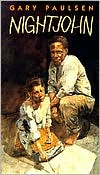
Historical Fiction: Nightjohn

BIBLIOGRAPHY
Paulsen, Gary. 1993. Nightjohn. NY: Delacorte Press. ISBN: 0385308388.

BOOK REVIEW
Twelve-year-old Sarny, a slave on the Waller plantation, knew what happed to slaves if they were overheard calling their owner “pig slop,” or were caught praying aloud, and if they attempted to runaway. If slaves were to know how to read and write, according to her mammy, they would be whipped till their skin hung like rags or they would lose their thumbs. But when Nightjohn, a new slave who had successfully escaped to freedom but returned to educator others, arrives, she agrees to exchange tobacco leaves for learning letters and words. In her newfound ability to read and write, however, Sarny is caught and as result her loved ones are punished. Based on true happenings and as told through the compelling dialect narrative of a young girl, Paulsen’s powerful and authentic book brings the harsh and grim reality of the treatment of slaves during the America’s pre-Civil War past and the story of how the strength of the human spirit and the power of literacy can never be crushed.

CONNECTIONS
*To find out what happens to Sarny read Paulsen’s sequel: Sarny: A Life Remembered.
*Read more historical fictions like The Slave Dancer by Paula Fox,

Friday, November 9, 2007

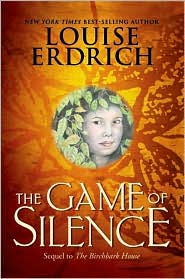
Historical and Biography: The Game of Silence

BIBLIOGRAPHY
Erdrich, Louis. 2005. A GAME OF SILENCE. NY: HarperCollins Publishers. ISBN: 0060297891.

PLOT SUMMARY
During the year 1850, the events of young Omakayas and her Ojibwe community's lives are interrupted by the arrival of distant relatives with the disturbing tale of their forced relocation and the possibility that Omakayas' community could be next.


CRITICAL ANALYSIS
Erdrich's A Game of Silence, the sequel to Birchback House, is set during the year of 1850 on the small island of Moningwanaykaning, Island of the Golden-Breasted Woodpecker, in Lake Superior. The book covers all four seasons of the years as they await the news of whether or not they are going to be forced to movie west as the westward expansion America.

Since the story is about the small Native American community, there are numerous characters, which include Omakayas' mother Yellow Kettle, her father Deydey,
little brother Pinch, and her older sister Angeline. Other prominent characters within the story is Old Tallow, a female hunter, her uncle Albert Pautre, who is a French Tradesmen, and Fishtail who was sent out to learn if the news of the relocation is true. The characters are well developed; however much of the focus and emotional details are focused on the nine-year-old protagonist Omakayas. She worries of the impending relocation from her home. The large amount of characters in the story the book has little stories about a specific character that involves the rest of the community. A good example of this is when a warrior girl named Two Sticks shoots a moose straight in the eye with an arrow (Erdrich, p. 79). There are also stories that are relatable to Omakayas' vision like dreams, such as dreaming of her father coming home after helping the neighboring white community's priest.

The overall plot is quite simple and true to the time. Many Native American tribes during the 19th century faced relocation from their lands due to the continuous growth of America. As any family or community would react to these type of threat, the feeling that spreads through the Ojibwe community is relatable to any reader who had to move at least once in his or her life.

The themes found within the plot of The Game of Silence are classic. The major theme seen is the one of change and acceptance. Omakayas has to learn to accept her dreams and the change that will come when she and her people leave their home. There is the theme of learning about oneself. This is specifically seen in Omakayas. Throughout the book she tries to ignore and not worry about her vision like dreams; however as her dreams, like the one of her father arriving home safely, becomes reality she and her people realize that she has a gift and is sent to the woods to face the spirits and her dreams. This is where she finally understands her purpose in the community and that her family and community must leave. There is the sense of family love. There is interaction between her entire immediate family but also with her family like community. There also a strong aspect of the culture's morals, beliefs and attitudes. Even though there is a white people settlement on the island, the community still say prayers to the great spirit Gizhe Manidoo. They also perform rituals such as placing tobacco in the ground as an offering for a safe passage from the island to the mainland.

The style of Erdrich's books quite simple. Even though there is no true dialect seen in the text, there is frequent use of Ojibwe words used to represent an expression or word, for example the word "ombay" means "come here and "chimookoman" means "white people" (Erdrich, p. 252, 255). To divide the year represented in the story, the book overall is organized into seasonal sections then by chapters. There is a prologue that tells of the coming of the relatives and introduces the characters that major characters. The speech patterns of the characters were relatively the same; however, the personalities show through heir mannerisms. Finally at the end of the book Erdrich provides a glossary of the Ojibwe words used in the text and their defintions.

Because of the multiple vignettes stories about all of the characters, The Game of Silence's style is very reminiscent of Laura Ingalls Widler's Little House series. Another similar aspect is the use of black and white drawings mixed into the text. With the fantastic examples of family and community interactions, use of traditional words, and the overall emotions shared by the entire community makes this as wonderful book.

BOOK REVIEWS
HORN BOOK MAGAZINE

(Intermediate) Nine-year-old Omakayas; her pet crow, Andeg; and the rest of her family have returned to their summer home, but things are changing. In this sequel to The Birchbark House (rev. 5/99), Erdrich deftly revisits the events of the previous book, including the devastating death of Omakayas's baby brother, Neewo, in the smallpox outbreak that took so many villagers' lives. And now a new threat has come: another group of Ojibwe, starving and barely alive, arrive with news of the encroaching chimookomanag -- white people. A removal order from the U.S. president means that the Ojibwe will have to move west, away from the land they love. While a small advance party sets off to gather information, the villagers adjust to the newcomers and prepare for the future. Using some of the conventions from the first installment, Erdrich brings her characters through the seasons, starting in summer. Omakayas is maturing with each passing month, and her grandmother, who has always taken a special interest in her granddaughter's gifts, gently pushes Omakayas toward adulthood. On one tense night, when she has a powerful dream that saves her father's life, Omakayas finally starts to understand her destiny and her gifts. Erdrich's own gifts are many, and here she has given readers another tale full of rich details of 1850s Ojibwe life, complicated supporting characters, and all the joys and challenges of a girl becoming a woman. Copyright 2005 of The Horn Book, Inc. All rights reserved.
(July 1, 2005)

SCHOOL LIBRARY JOURNAL
Gr 5-8-Omakayas's tale, begun in The Birchbark House (Hyperion, 1999), continues in this book. Older and more insightful, Omakayas begins to understand the elements of life more fully as she accepts her gift of telling dreams. Changes are coming to the Ojibwa people and she struggles to deal with all that she is experiencing and her dreams foretell. Her sister falls in love with a warrior, strange and lost members of her tribe come to rely on her, and her people are threatened with certain eviction from their homes and food supply. But traditions are strong, and after Omakayas is sent off into nature to face the spirits and her dreams, she learns to accept the fate of her people and comes to see it as an adventure, "the next life they would live together on this earth." Although the story is set on an island in Lake Superior in 1850, readers will identify with the everyday activities of the Ojibwa, from snowball fights to fishing excursions, providing a parallel to their own lives while encouraging an appreciation for one that is very different. The action is somewhat slow, but Erdrich's captivating tale of four seasons portrays a deep appreciation of our environment, our history, and our Native American sisters and brothers.-Kimberly Monaghan, formerly at Vernon Area Public Library, IL Copyright 2005 Reed Business Information.
(July 1, 2005)

CONNECTIONS
*
Have the group read the prequel The Birchback House.
*Discuss the cultural beliefs of the Ojibwe community, such as it gender roles.
*Have the group discuss the similarities between Erdrich's books and Laura Ingalls Wilder's Little House books.

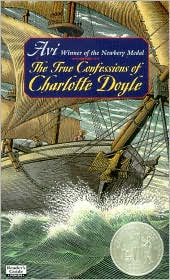
Historical and Biography: The True Confessions of Charlotte Doyle

BIBLIOGRAPHY
Avi. 1990. THE TRUE CONFESSIONS OF CHARLOTTE DOYLE. NY: Avon Book. ISBN: 0380714752.

*1991 Newbery Honor Book*

PLOT SUMMARY
In 1832, leaving England, thirteen-year-old Charlotte Doyle leaves England and her boarding school to sail to America where her family lives. However, little does she know that she becomes entwined in a mutiny plot aboard the ship the Seahawk, is accused of murder, and becomes part of the crew. Surviving a hurricane, Charlotte finally arrives in American going home to her family, but only to realize that her true home and family is aboard the Seahawk.

CRITICAL ANALYSIS
Avi’s The True Confessions of Charlotte Doyle is an exciting historical novel that is set during the summer of 1832, the protagonist Charlotte Doyle brings the readers along with her has she walks to the docks in Liverpool, England to the deck of the ship the Seahawk, and to her family's household in Providence, Rhode Island. Seen though Charlotte's eyes, the descriptions of these places are vivid and exciting. Such as when walking among the docks she is,
agog[ed] at the mass of ships that lay before us, masts and spars thick as the bristles on a brush. Everywhere I looked I saw mountains of rare goods piled high. Bales of silk and tobacco! Chests of tea! A parrot! A monkey! Oh yes, the smell of the sea was intoxicating to one who knew little more than smell of the trim cut lawns and the fields of the Barrington School (Avi, p. 8)

As fantastic as the docks are, the story primarily set aboard the big ship Seahawk. First as a passenger then as a member of the truth, Charlotte sees all parts of the ship, which include the captain's cabin, the forecastle (the crew's quarters), the hold, the brig (the ship's jail), and even aloft on the mainsail.

The list of characters is quite large. In addition to Charlotte there is the cruel Captain Jaggery, the Seahawks crew, which include important characters such a Zachariah a black man who serves as the ship's cook and surgeon. Despite the large cast, each character has their individual personalities. Charlotte, herself just out of a boarding school, is a polite girl who describes herself at the beginning of her story as having not yet begun the shape, much less the heart of a woman... I certainly wanted to be a lady. It was not just my ambition; it was my destiny"; however, as she lived through the events on that "fateful voyage" she develops into a mature young woman (Avi, p. 1, 3). Captain Jaggery is a man who has a reputation for sailing his ship and crew under a tight and firm rein, and as the story progresses the readers see his anger and rage come to the forefront.

The plot of Avi's book is simple and quite exciting. It is full of actions, such as murders and sailing through hurricanes. There is even surprising twists to the story. Because of his past actions against the crew, Captain Jaggery is the subject of a mutiny and murder plot by the crew. They are to avenge the cruel death of a fellowship mate from a previous voyage. Mutinies, especially due to the actions of the ship's captains, is fairly common part of sailing during this period of time.

There are several themes seen in The True Confessions of Charlotte Doyle, which reflect the many of the classic themes found in literature. There is the theme of the triumph of good versus evil. A second theme is the revenge, which is fueled by the Seahawk crew. Finally, there is the classic coming of age aspect to Charlotte, who boards the ship in England as a girl but arrives in Rhode Island as a woman with experiences that no normal woman would have never gone through let alone survive.

The style of the book is well formated. Charlotte is the narrator and is told in a recollection approach. In the story she states that her father had requested her to write in a journal during her voyage, and like a dutiful daughter she does. She recounts truthly all the happens aboard the Seahawk. To begin the story, she provides "An Important Warning" describing that this is a true story and that the she initially believed that her voyage was to be a "lark" (Avi, p. 3). This is also the first area that there is a sense of foreshadowing. The book is also separated into two parts. The first part is where the story that leads up to Charlotte's decision to become part of the crew after witnessing her friend Zachariah's death by the hand of the captain. The second part relays her story as a sailor and the events that follow.

The mannerisms and the speech of the characters reflect the time period wonderfully. Charlotte described herself, after attending the boarding school, speaks properly and had the ultimate goal in life to become the woman that her parents wanted her to be. Although seasoned sailors, the crew also have a level of gentlemanly manners. In the first part of the book, they addressed Charlotte as Miss Doyle and were conscious of their use of language around her.

The difference language and speech patterns also illustrations the different social classes during that time. Charlotte and Captain Jaggery spoke in a manner that represented education and a higher social class, and the Seahawk crew's represented the lower social classes that was not properly educated. The example of this is also seen in the mannerisms of Charlotte's family. Her younger siblings and mother make comments on Charlotte's tanned, rough hand, and short hair appearance. Her father barks orders at the housemaids. Even Charlotte had recognized that she had acted nearly the same at the beginning of her voyage; however, once in Rhode Island, she had entered the level of her crew mates and did not care if there was a social difference between her and the family's housemaids.

To finish the book, Avi provides an Appendix that provides a diagram of the Seahawk and a description of how the Ship Times that explains how the crew worked in watches throughout the day. With all of these fantastic details, Avi has written a fantastic historical fiction that will grab any reader who picks it up.

BOOK REVIEWS
PUBLISHERS WEEKLY
Told in the form of a recollection, these ``confessions'' cover 13-year-old Charlotte's eventful 1832 transatlantic crossing. She begins her trip a prim schoolgirl returning home to her American family from England. From the start, there is something wrong with the Seahawk : the families that were to serve as Charlotte's chaperones do not arrive, and the unsavory crew warns her not to make the trip. When the crew rebels, Charlotte first sides with the civilized Captain Jaggerty, but before long she realizes that he is a sadist and--the only female aboard--she joins the crew as a seaman. Charlotte is charged with murder and sentenced to be hanged before the trip is over, but ends up in command of the Seahawk by the time it reaches its destination. Charlotte's repressive Puritanical family refuses to believe her tale, and the girl returns to the sea. Charlotte's story is a gem of nautical adventure, and Avi's control of tone calls to mind William Golding's 1980s trilogy of historical novels of the sea. Never wavering from its 19th century setting, the novel offers suspense and entertainment modern-day readers will enjoy. Ages 11-13. (September 14, 1990)

SCHOOL LIBRARY JOURNAL
A breathtaking seafaring adventure, set in 1832. Charlotte Doyle, 13, returning from school in England to join her family in Rhode Island, is deposited on a seedy ship with a ruthless, mad captain and a mutinous crew. Refusing to heed warnings about Captain Jaggery's brutality, Charlotte seeks his guidance and approval only to become his victim, a pariah to the entire crew, and a convicted felon for the murder of the first mate. There is no doubt that she will survive, however, for the telling is all hers, masterfully related in a voice that perfectly suits the period and the heroine. At first, Charlotte exudes the haughty self-confidence and the need for propriety that only those of privilege and wealth can pull off, yet she also exhibits the naivete of an adolescent taught to respect and not question her elders--as long as they are of her class. As she sees the insane captain for what he is, she switches allegiances--thus endangering her life--and becomes part of the crew, passing their rugged tests and proving that she can become as adept as any of them. Her changing views and personality from a prim and proper pain to respected friend and mate are aptly reflected in her narrative, and the point of view gives Avi excellent opportunities for some fine foreshadowing. The irony at the end--that indeed her beloved papa is very much like the captain, tyrannical and unyielding--will leave readers agape, and they will sigh with relief when she deserts her very rigid family and returns home--to the ship. A sensuous novel, evoking the sights, sounds, and smells of the ship and the sea; the moods of captain and crew; the terror and bloodshed caused by the captain; and the nature of friendship and loyalty. --Trev Jones, School Lib. Journal (September 1, 1990)

CONNECTIONS
*Have a discussion with the group that answers questions about the book's plot, style, themes, and characters, such as the topic of change in traditional gender roles.
*Ask the group what would they have done if they were in a situation like Charlotte.
*Read Catherine, Called Birdy by Karen Cushman and have the group compare the two stories.
*Learn more about sailing and ship during the 19th century with books like The World's Sailing Ships by Camil Busquets.

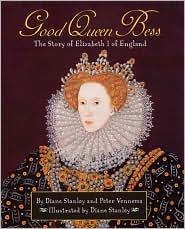
Historical and Biography: Good Queen Bess: The Story of Elizabeth I of England

BIBLIOGRAPHY
Stanley, Diane and Peter Vennema. 2001. GOOD QUEEN BESS: THE STORY OF ELIZABETH I OF ENGLAND. Ill. by Diane Stanley. NY: HarperCollins Publishers. ISBN: 0688179614.

PLOT SUMMARY
This biography follows the life of England’s passionate and strong-willed Queen Elizabeth I from her birth, through her forty-five year reign and to her death.

CRITICAL ANALYSIS
Authors Diane Stanley and Peter Vennema has created a wonderful biography of Queen Elizabeth I that is filled with accurate information presented in a form of story and detailed illustrations. The story of Elizabeth I is greatly detailed and at times complex; however Stanley and Vennema have taken the important information and have written it in a very clear and concise way.

The actual historical facts come in various forms. To begin the book, Stanley and Vennema provides as note about the religious movement that was happening during this period time and how it was important to the country of England, especially during Elizabeth’s reign. Elizabeth’s story begins with the account of her father King Henry VIII and is continuous desire for a male heir and introduces his six wives, who he was able to marry because he declared changed England’s religion from Catholicism to the new Church of England. The authors also use dates in their text, such as on November 17, 1558 when Queen Mary, Elizabeth’s half-sister, died and Elizabeth was crowned as the new queen, which the readers a perspective when these events happened.

The personal details of Elizabeth truly allow the readers to gain a greater understanding of how she was a person. She was highly educated, speaking five languages other than English, and was talented in many areas. Because of her education, as the readers will discover further on, Elizabeth was able to be a discuss matters with foreign governments, how to intelligently handle her own councilors, and rule her country will a tolerable but firm hand. The story also creates a window into the feelings Elizabeth had on many events that happened during her reign. For example, despite the fact that Mary, the Queen of Scots was convicted of conspiring against her and was executed, Elizabeth grieved for the Mary, who was in fact her cousin and because they had never met. Other matters that Elizabeth felt strong about was the pressures and desires on her to marry and have an heir. However, since she knew that this would involve marrying a man from another country, which would not only benefit that country but it also meant that she would have to relinquish her reins has ruler to her husband. Keeping her country in her best interest, she never married and continued to be the ruler who loved her country and her people.

Stanley and Vennema also provide accurate quotes. A wonderful example of this is seen when Elizabeth addressed her army before they fought against the Spanish Armada. She states, “I know that I have but the body of a weak and feeble woman, but I have the heart… of a king – and a king of England,” (p. 28) which as actually a direct quote from the speech that she truly did made in 1588.

The illustrations that Diane Stanley created for this book are wonderfully detailed and reflect the ornate decorations and fabrics that are seen during the Elizabethan Era. Though the overall appearance of the scenes depicting Elizabeth, other characters, and her surroundings are slightly two-dimensional in nature, the details of the clothing are remarkably accurate, the trunk hose (the puffy round pants that the men wore over tights), their doublets (the coats), and even their duckbilled shoes are accurate to the time. This is especially the case for Elizabeth. Her ornate jewelry, hair ornamentations, the farthingale-style of garments, the high lacy-collar, and even the fancy brocade fabric is accurate recreated and reflect many of her portraits scene in museums. By using the illustrations, the authors have yet another method to show the readers the years passed, which is not only seen in the different styles of clothing but also in the facial appearances of the characters. Elizabeth appearance began as a young woman and has the years passed her appearance begins to age. The end of the book the illustrations depict Elizabeth depicted wearing her unnatural red wig, white skins and red rouge, her wrinkle face.

The organization and design of the Good Queen Bess: The Story of England’s Queen Elizabeth I is executed well. The story begins with the story of Henry VIII and his search for a wife who could provide an heir and ends with Elizabeth’s death in 1603 and the crowning of James VI. There is an illustration on every page. The text is always situated on the lower portion of the page with an illustration above. At the very end of the book, author also provide their bibliography of the sources they used and they also provide a bibliography of recommended books for young readers who would like to read more about the most powerful queen that England ever had.

BOOK REVIEWS
HORN BOOK GUIDE
Complexities of politics and personality are necessarily simplified for this slim, handsome volume, but their substance is remarkably well conveyed. This is a welcome reissue of a fascinating introduction to one of history's most influential figures. Inc. All rights reserved. (April 1, 2002)

PUBLISHERS WEEKLY
Once again available from the husband-and-wife team behind Bard of Avon: The Story of William Shakespeare, here is another biography from the Elizabethan Age: Good Queen Bess: The Story of Elizabeth I of England (1990) by Diane Stanley and Peter Vennema, illus. by Stanley. Describing the conflict between Catholics and Protestants, the authors lay the groundwork for Queen Elizabeth's greatest challenges: stopping the bloodshed and uniting her country under one faith, and keeping the peace with the rest of Europe. Intricate artwork conveys the delicate lace and accoutrements of court dress, patterned ceilings and cobblestone streets. (Aug.). (September 3, 2001)

CONNECTIONS
*Read more about Queen Elizabeth I with books like Elizabeth I and Tudor England by Stephen White-Thomson and Queen Elizabeth I by Betka Zamoyska.
*Learn about other famous figures and the time period itself with books like Shakespeare and the Elizabethan Age by Andrew Langley.
*Learn about the clothing worn during Elizabeth’s time with books like Elizabethan England by Kathy Elgin.
*Make lace collars like the men and women wore during the Elizabethan Era by accordion fold layers of tissue paper and paper clip it in the back of the neck.